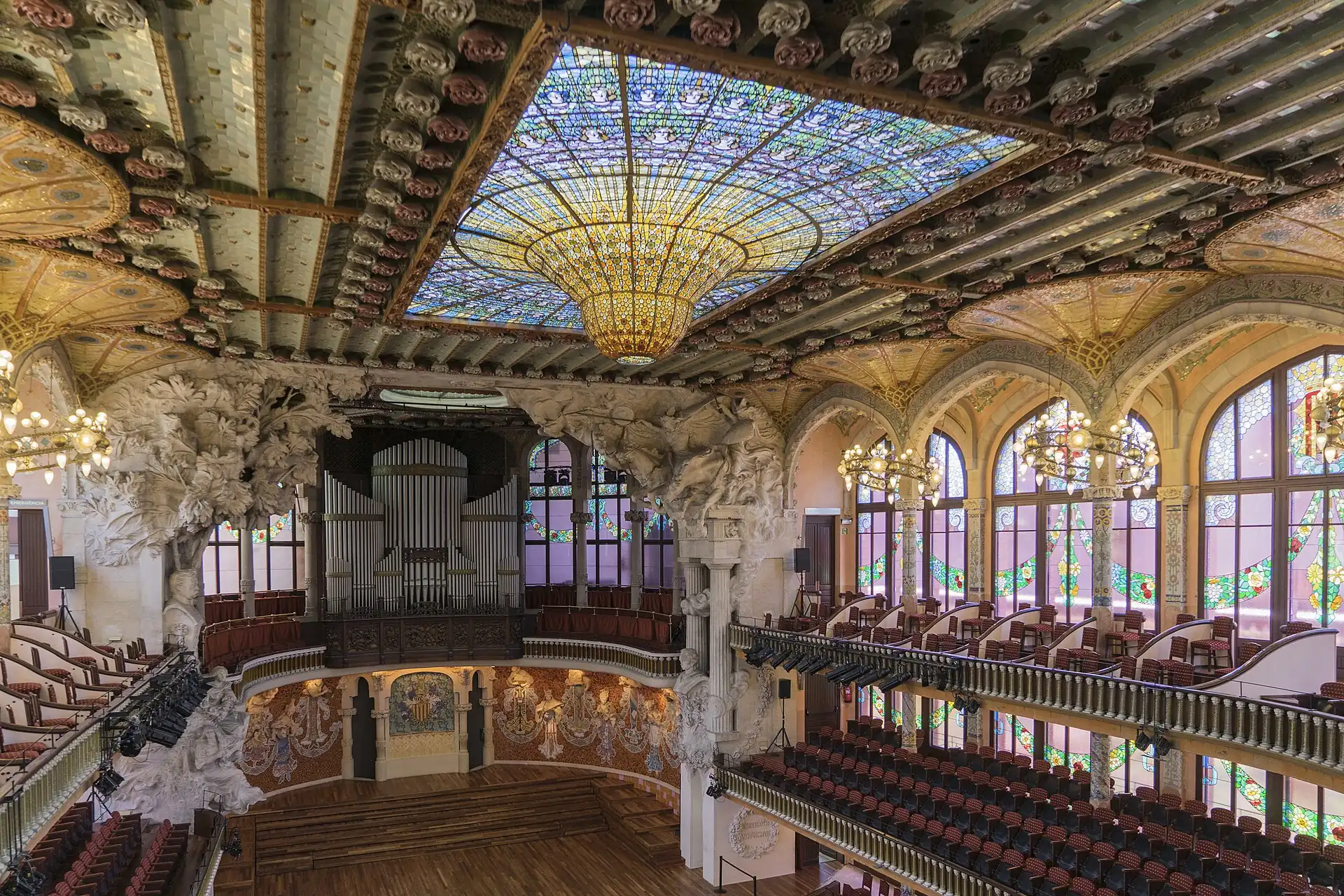
In the room
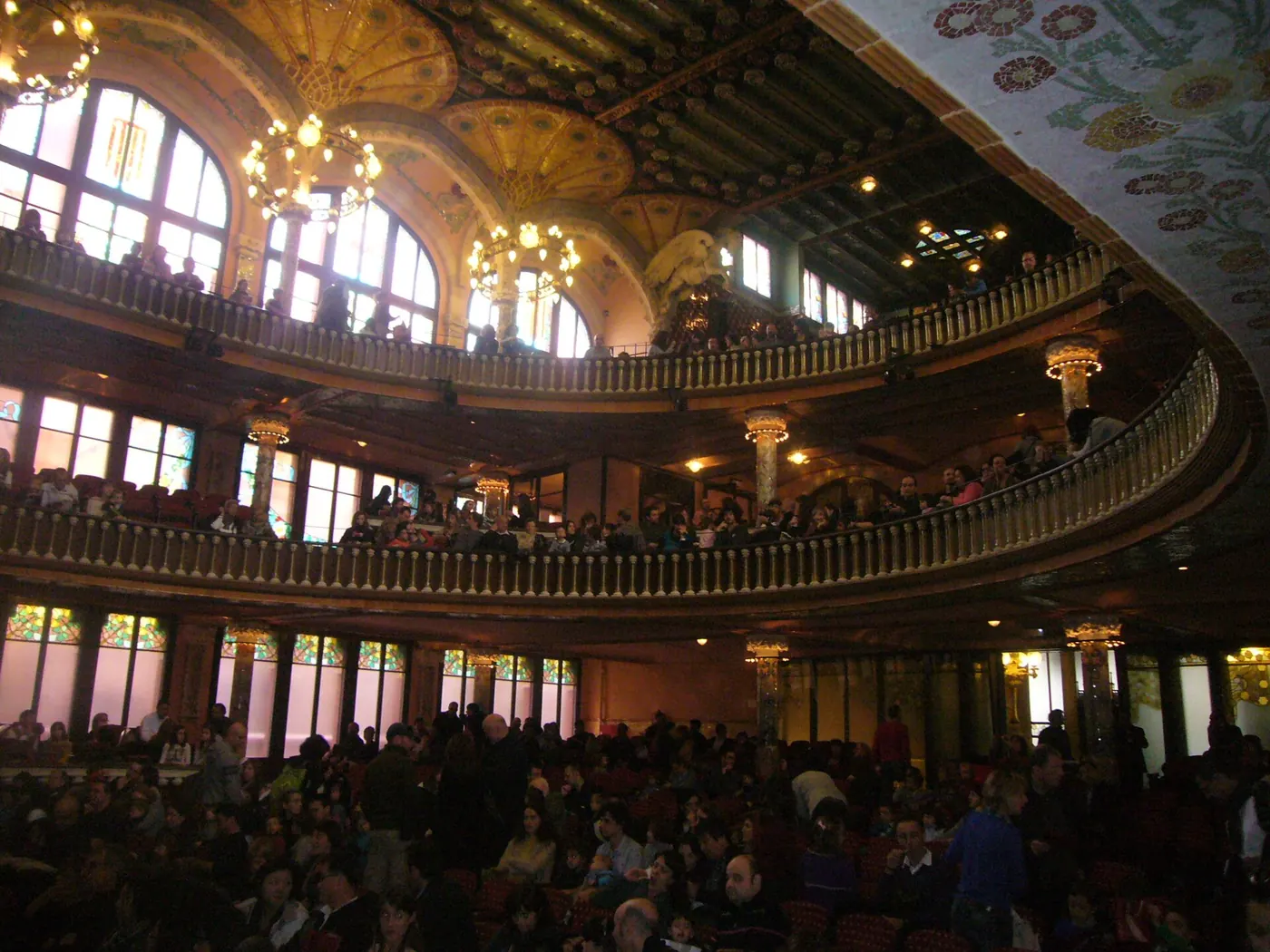
The experience
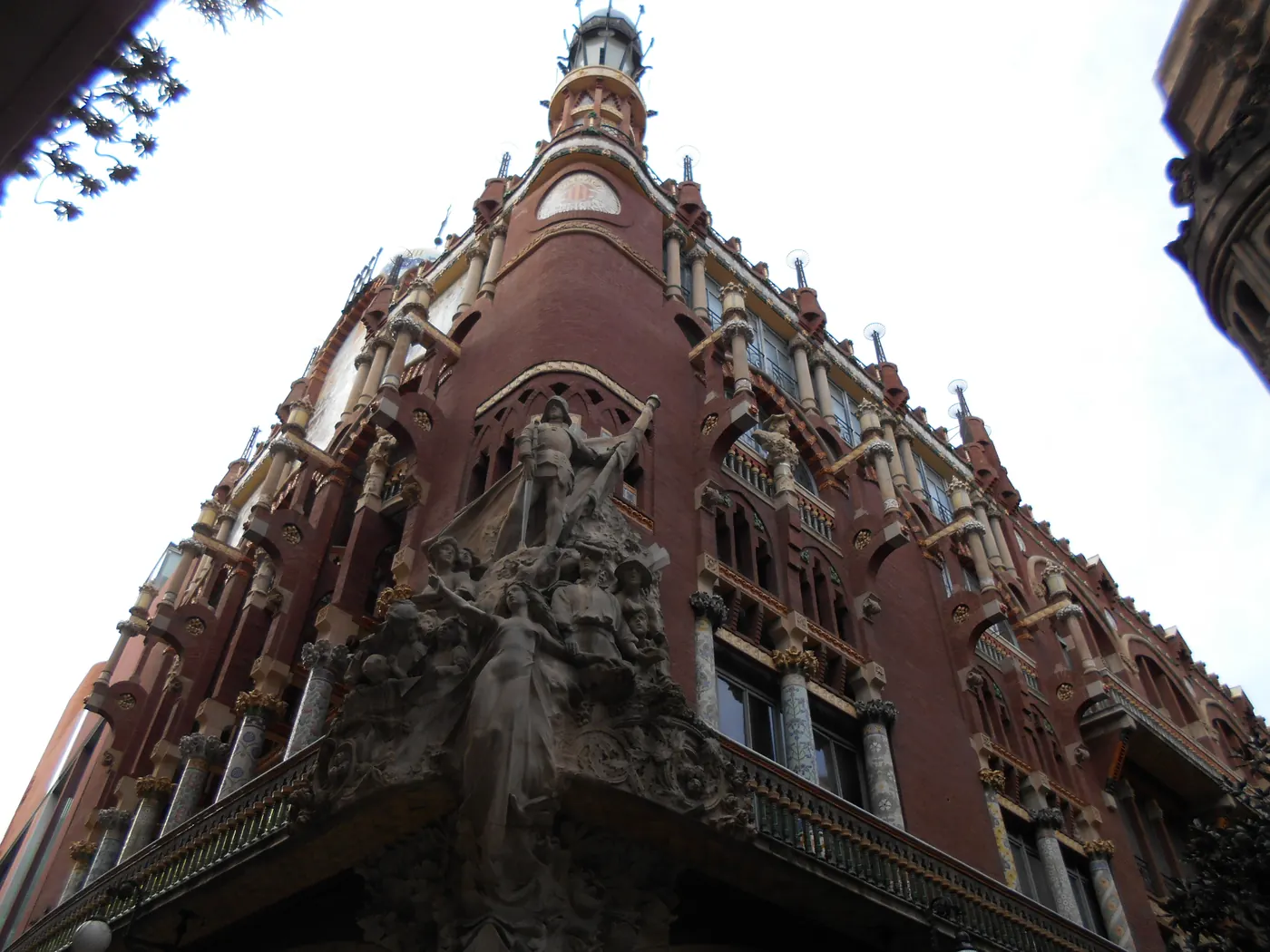
The Palau was built between 1905 and 1908 for the Orfeó Català, the choral society founded in 1891, and paid for by the Barcelona bourgeoisie who wanted a Catalan house for Catalan music. Its architect was Lluís Domènech i Montaner, not Gaudí, and the difference matters: where Gaudí bends stone, Domènech lets glass, mosaic and iron do the talking. It opened on 9 February 1908 on a cramped corner of Sant Pere, which is why the façade comes at you sideways and the surprise is kept for inside.
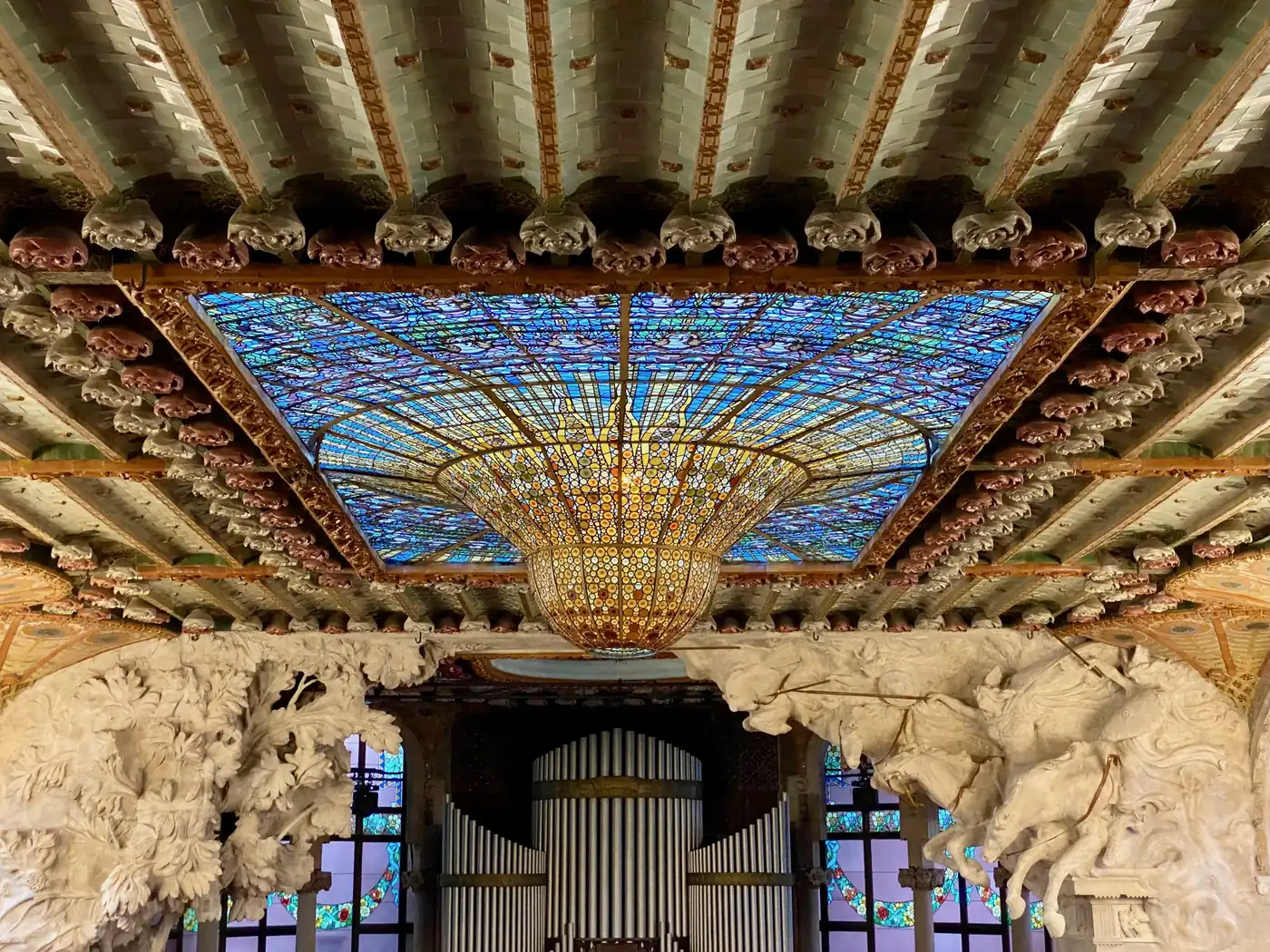
Inside, the hall is the only auditorium in Europe lit by daylight alone during the day. Antoni Rigalt's stained-glass skylight hangs over the stalls as an inverted dome, gold at the centre and blue around it, a sun in a sky. Behind the stage eighteen young women step out of the wall, their upper bodies carved by Eusebi Arnau, their skirts in Lluís Bru's mosaic, each with a different instrument; everybody calls them the muses. The room seats about 2,200 and above half a million people a year come to hear it.
Oscar Tusquets and Carles Díaz restored and extended the building between 1982 and 1989, and in 2004 added the Petit Palau, a 538-seat chamber hall eleven metres below the square, so the big room could be left alone. UNESCO listed the Palau, with the Hospital de Sant Pau, in 1997.
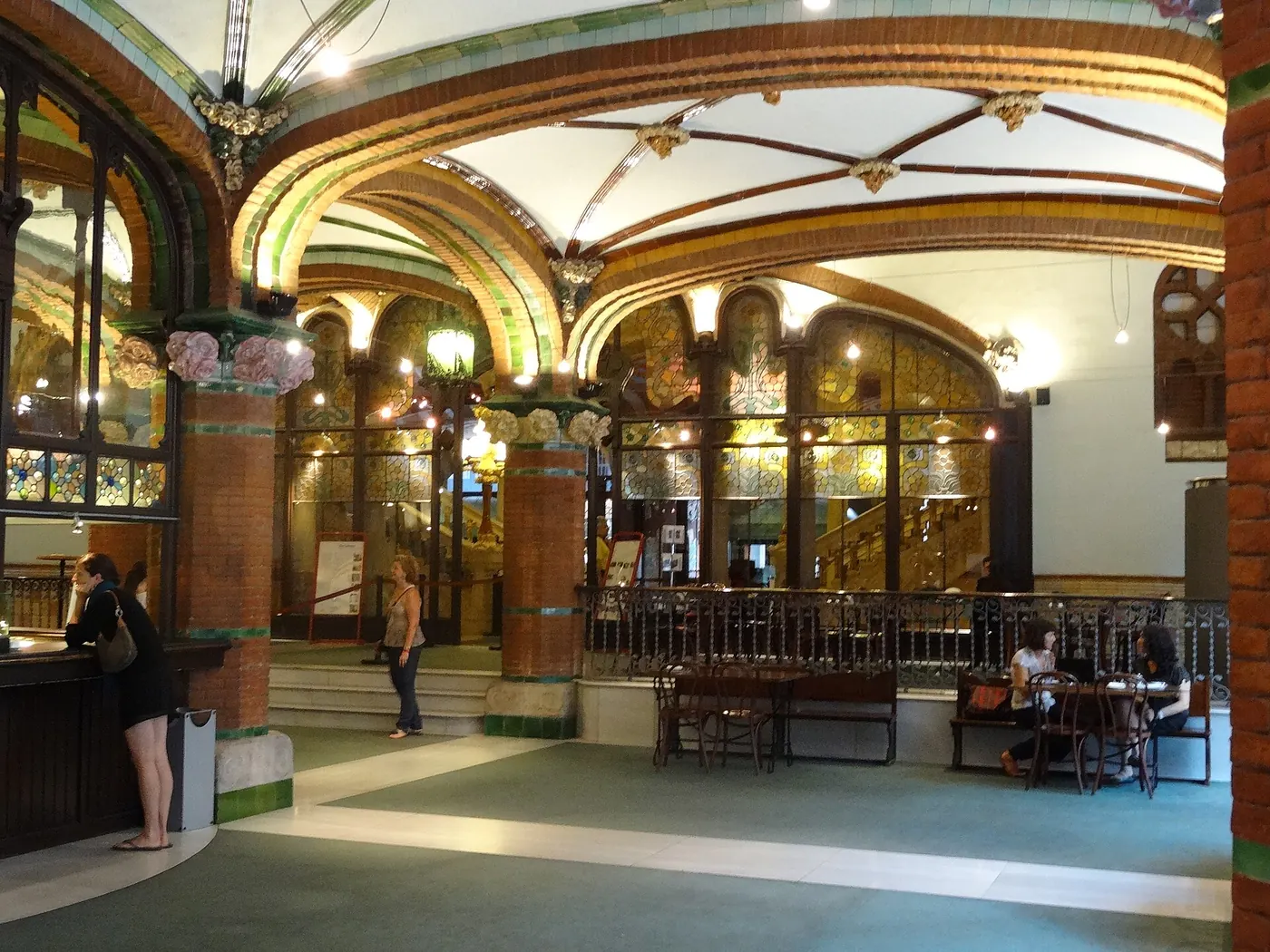
Insider tip
Walk in knowing
The daytime tour is the only way to see the skylight doing its job; the evening concert is the only way to hear the room. Do both, on different days.
Why it fits
Why it is in the atlas
Beauty before music, then music in it: a glass sun, eighteen muses, a choir's own house. Nothing else looks or sounds like it.
Plan the trip
When to go, hours, getting there
Best time to go
Concerts run year round; the Orfeó Català and the Palau's own season are the reason the building exists. Mid-week evenings are quieter. Daytime visits are timed; book ahead in summer.
Hours
Self-guided tours daily 10:00 to 15:30 (peak season later). Concerts most evenings, classical and chamber, occasional jazz and world. Closed 25 December and 1 January.
Getting there
Carrer Palau de la Música 4 to 6, at the corner with Carrer de Sant Pere Més Alt, in the old town. Urquinaona metro station (L1 and L4) is the nearest, a short walk away; buses V15, V17 and 47 also stop nearby.
FAQ
Questions people ask
Who designed the Palau de la Música Catalana?
Lluís Domènech i Montaner, built 1905 to 1908, opened 9 February 1908.
Is it a World Heritage Site?
Yes, listed by UNESCO in 1997 together with the Hospital de Sant Pau.
How many seats?
About 2,200 in the main hall; the Petit Palau (2004) seats 538.
What is special about the light?
It is the only auditorium in Europe illuminated entirely by natural light during the day, through Rigalt's inverted-dome skylight.



Find it again