02 · GALLERY
Five frames.
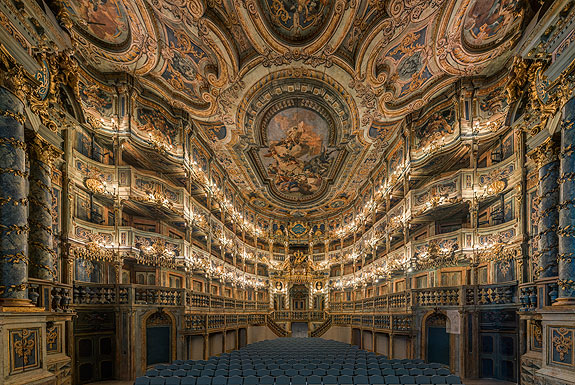


You walk in expecting a museum and meet an instrument. The Margravial Opera House is 277 years of painted wood, eight crystal chandeliers, three tiers of carved boxes leaning over a stage barely seven metres deep. The wood breathes. The sound has nowhere to escape, so it stays. Two hours of baroque opera and you come out lighter, somehow. The audience whispers as if the building can hear, because the building can hear. The Margravine of Bayreuth built it for her own pleasure in 1748 and nobody since has improved on the room.
The 35-minute architecture-only daytime tours are far cheaper than a performance and arguably the better experience. The acoustic is alive even in silence.
The most pristine surviving baroque opera house in Europe and a 1748 acoustic miracle. Pure beauty-of-the-room editorial slot.
Hours of operation are limited and most performances are guided tours. UNESCO-protected so audio events are tightly programmed. Bayreuth Baroque festival in early September is when the Margravial Opera House is at its most active.
Daily guided tours, typically 09:00 to 17:00 (closed Mondays in some seasons). Performances during Bayreuth Baroque (September) and selected concerts. Closed for restoration intervals, check bayreuther-festspiele.de.
Train from Nuremberg (45 minutes) or from Berlin (5 hours via Nuremberg). From Bayreuth Hauptbahnhof, ten-minute walk south to the Opernstraße. The Margravial sits next to the Neues Schloss in the city centre.