Europe · 20

THE CONCERTGEBOUW
A beacon of precision acoustics and understated Dutch elegance. The hall opened in 1888 and remains one of the world's most acoustically revered concert venues.

HARPA CONCERT HALL
Glass scales reflecting Arctic light, designed by Olafur Eliasson. Perched on Reykjavík's waterfront where the North Atlantic meets the city skyline. Acoustically flawless.

BERGHAIN
Cathedral of techno in a former East-Berlin power plant. Eighteen-metre brutalist ceilings, a purist sound system, and the strictest door policy in the world.
LUX FRÁGIL
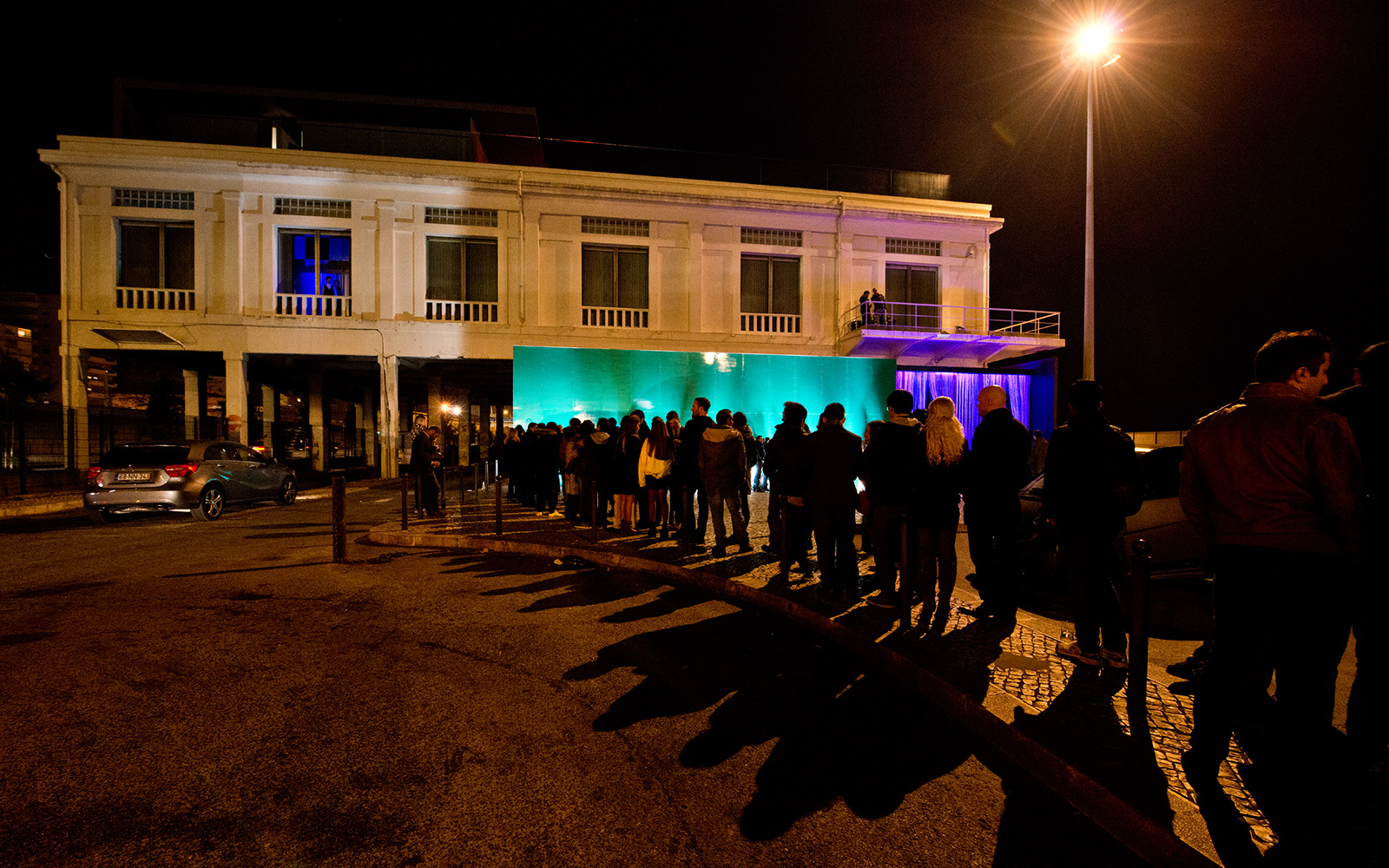
Iconic Lisbon club on the Tagus with sunrise views from the terrace. An architectural hymn to rhythm, light and emotion. Where Portugal's creative soul converges.

COVA SANTA
Carved into a mountainside south of Ibiza Town, where nature and nightlife make peace. The evening begins on the open terrace, moves into refined restaurant spaces and culminates deep inside a natural cave.

DC-10
Balearic institution near the Ibiza runway. Terrace sunrise sessions and raw underground energy. Pilgrims of the beat gather to lose themselves and find their tribe.

KOKO
Restored 1900s theatre with modern production. Eclectic bookings, cinematic interiors. Red velvet meets LED. Nostalgia meets next-wave.

STUDIO 338
Glass-roofed terrace with big-room sound and indoor-outdoor flow. A greenhouse for hedonists.

BARUTANA (KALEMEGDAN FORTRESS)
Historic fortress courtyard turned summer techno hotspot under the stars. A 17th-century gunpowder magazine now open-air, the stone vaults reverberate with deep bass instead of cannon fire.

DIMENSIONS FESTIVAL
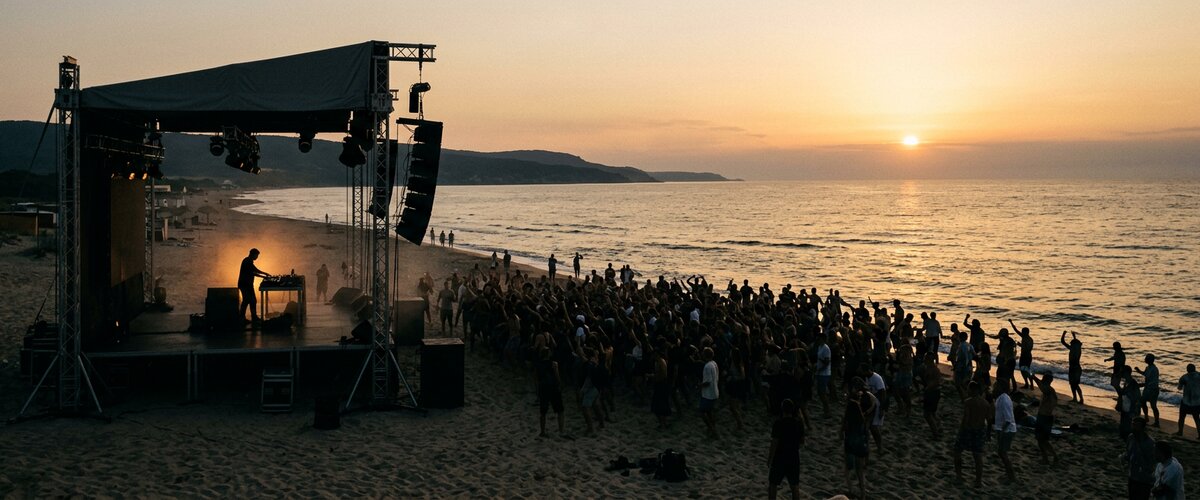
Underground electronic week at Fort Punta Christo near Pula, an Austro-Hungarian sea fortress turned festival site. Boat parties, beach stages, fortress courtyards, Adriatic dawns.

BARBARELLA'S DISCOTHEQUE
Legendary Adriatic after-hours under the stars. Boat parties feed the night. The open-air floor sits between pines and sea, alive with light, heat and rhythm.

LOFTAS
A Baltic warehouse beating with rebellion. Art, bass, sweat under one roof. Housed in a repurposed factory in Vilnius' Naujamiestis district.

THE ICE HOTEL CONCERTS
Inside a cathedral carved from frozen river water, every note reverberates like a prayer trapped in time. The hall is rebuilt by hand each winter from ice cut from the Torne River.
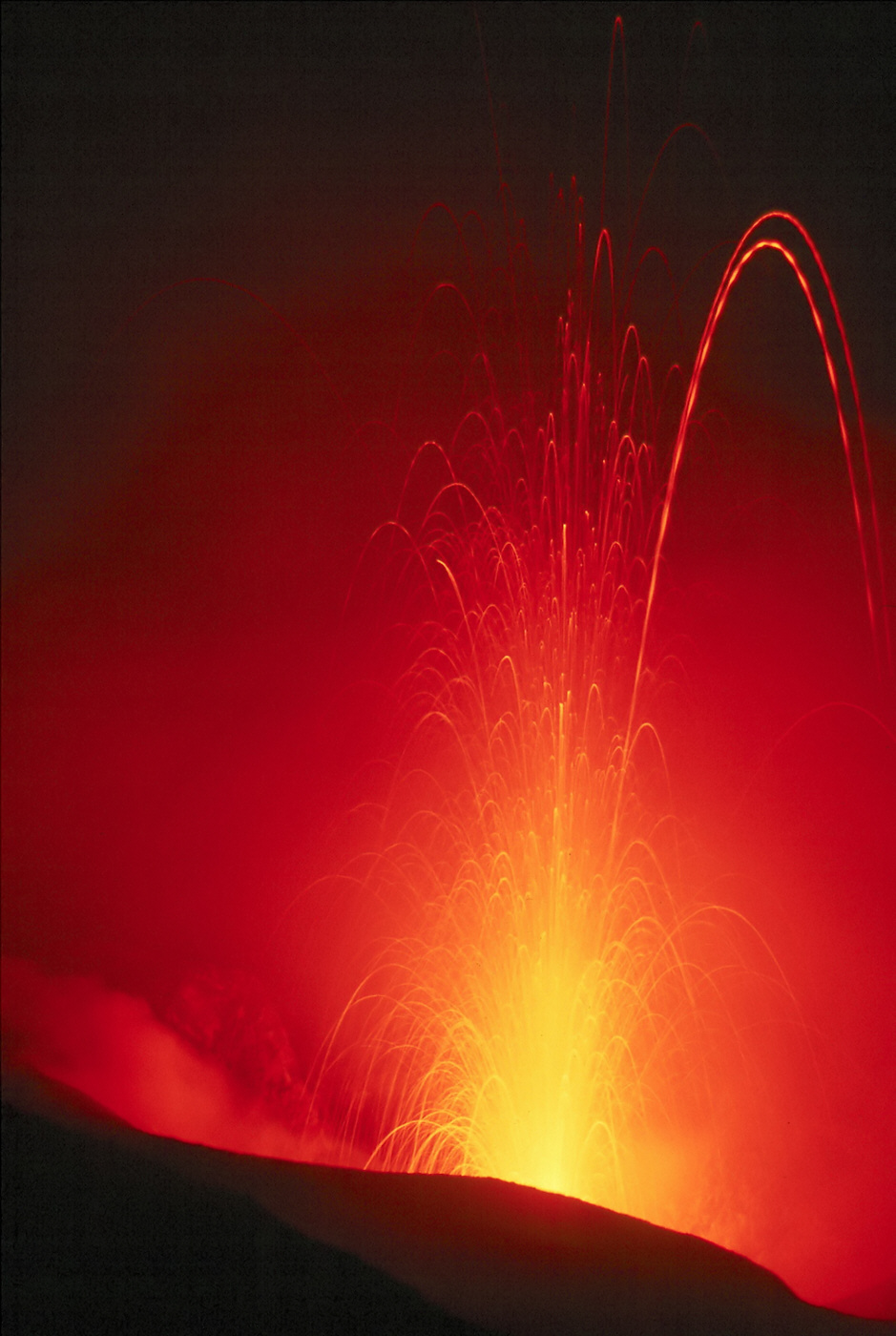
MOUNT STROMBOLI FIRE FESTIVAL
DJs play as the volcano grumbles beneath. Lava casts strobes on the sea. Nature's pyrotechnics replace LED screens. Raw earth rave.

THE VENETIAN RESONANCE
Concerts inside half-flooded palazzos. Musicians perform knee-deep in Adriatic reflections. A surreal intersection of decay, history and sonic innovation.

PALAU DE LA MÚSICA CATALANA
A modernist cathedral for sound: stained glass, mosaics, and sculpted light form a kaleidoscopic cocoon for every note. The inverted stained-glass dome by Antoni Rigalt is among the world's most photographed concert hall details.

ARSENAL CONCERT HALL
A 19th-century military arsenal reborn as a cathedral of modern acoustics and ancient stone. Designed by Ricardo Bofill in 1989; wood-clad shoebox layout, sandstone exterior.
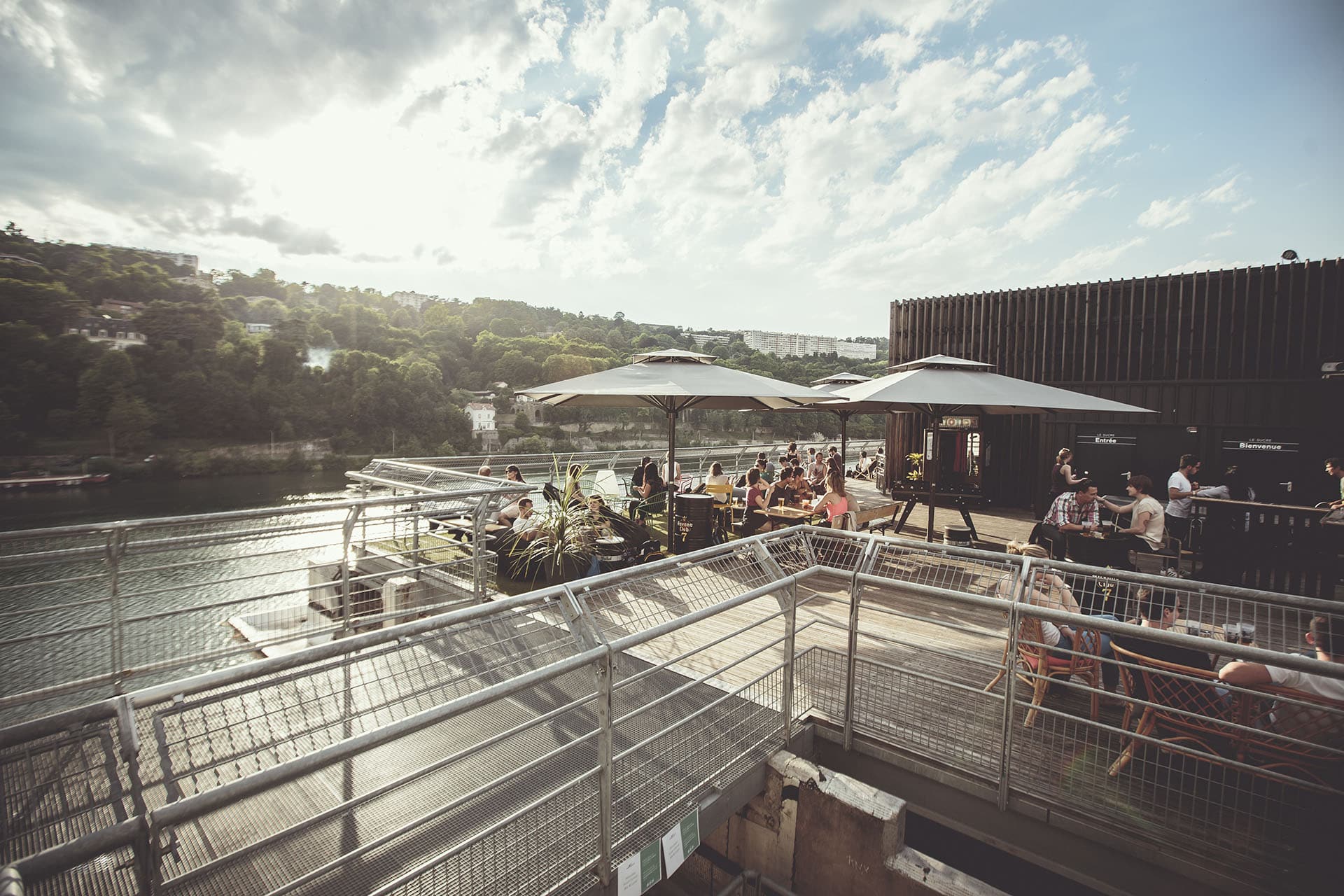
LE SUCRE
A rooftop rebirth. A former sugar warehouse gone sweet with sound, overlooking the Rhône.
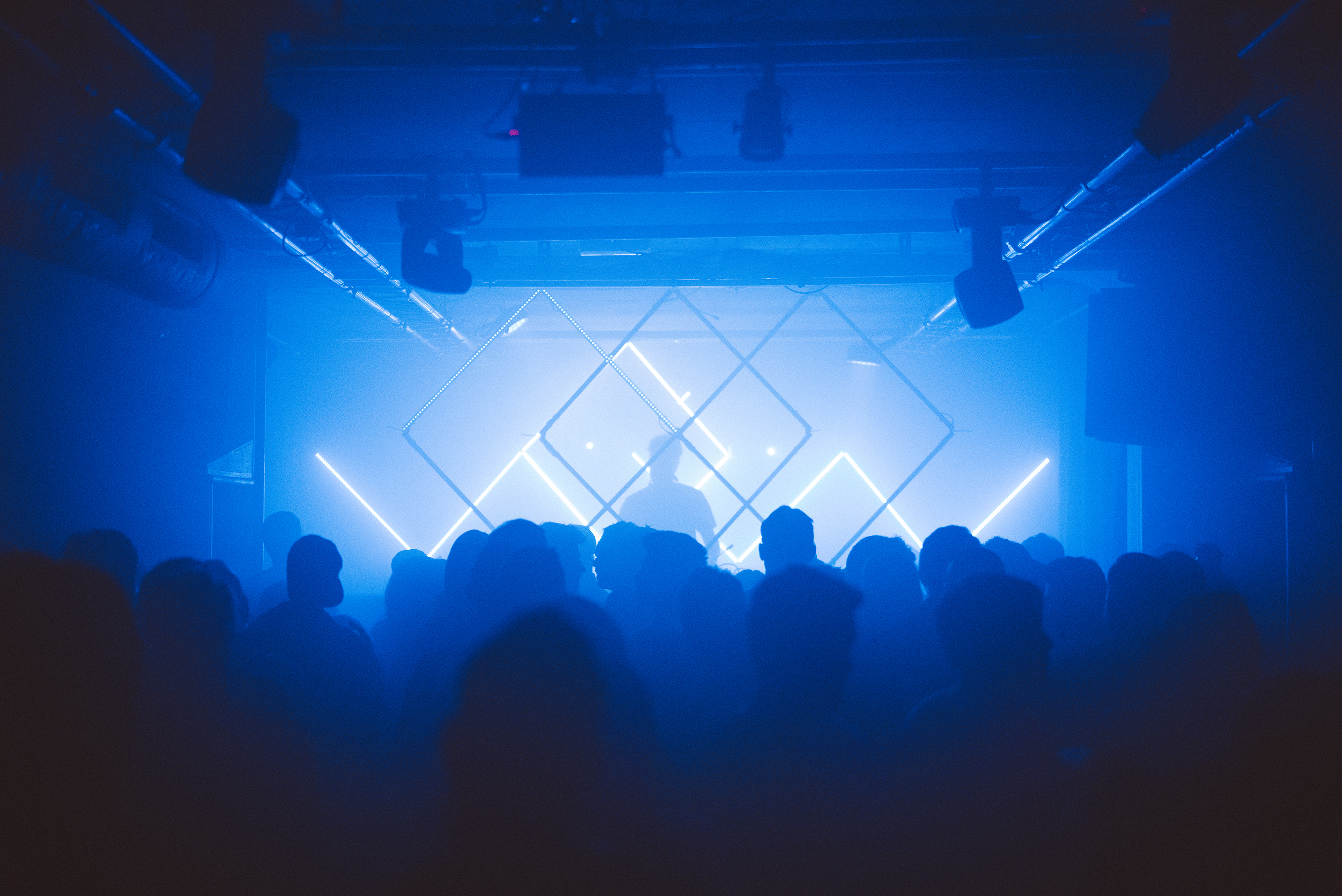
LA GRAVIÈRE
Industrial riverside space for deep electronic nights. Geneva's beating underground heart, beside the Rhône.
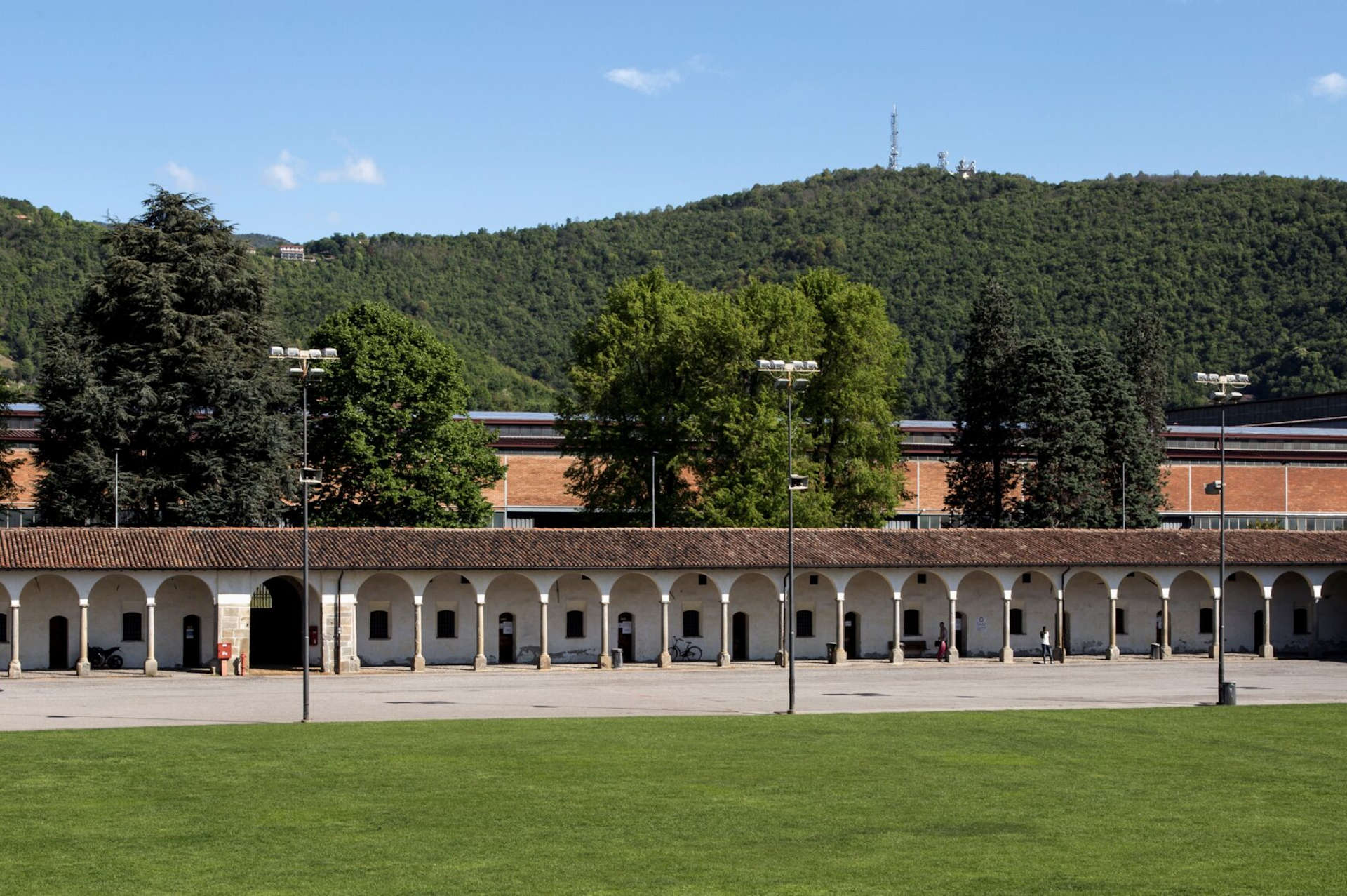
LAZZARETTO DI BERGAMO
Once a 15th-century refuge for the sick, the Lazzaretto di Bergamo has been reborn as a spiritual concert space where history hums through every stone. Stone arches, candlelit performance, courtyard ambience.

MOUNTAIN HOSTEL GIMMELWALD
A car-free Swiss alpine hostel at 1,400 metres above the Lauterbrunnen valley. Wooden chalet, communal stove, the Eiger and Jungfrau as the back wall. Travellers play guitar on the terrace at sunset.
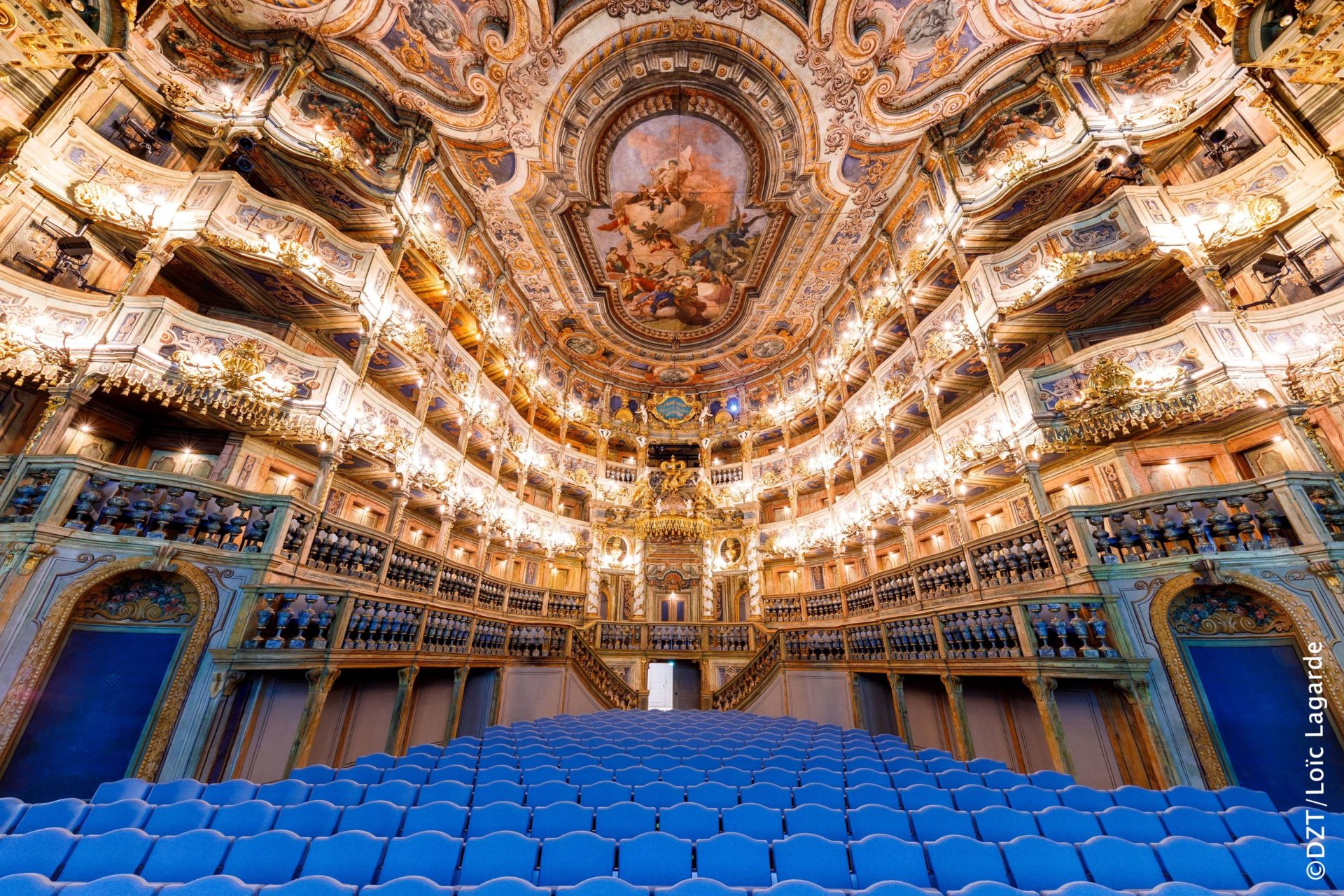
MARGRAVIAL OPERA HOUSE BAYREUTH
A 1748 Baroque court opera house, the most ornate surviving wooden theatre in Europe. UNESCO listed. The Margravial is a gilded wooden cathedral where Vivaldi and Hasse still echo off original painted scenery.

THE CAVES OF NERJA CONCERT SERIES
A vast Andalucian limestone cave system that has been hosting an annual summer concert series since 1960. Orchestras and flamenco ensembles perform in a natural amphitheatre, stalactites dripping around them. The acoustic is older than any building.

SUNTORY HALL
Asia's most decorated vineyard-terrace concert hall, opened 1986. Karajan called it 'a jewel box of sound'. Anchor of the Japanese classical music scene and the acoustic blueprint for every modern Asian concert hall that followed.

SAPPORO CONCERT HALL KITARA
Vineyard-terrace masterpiece in Nakajima Park, Sapporo. Nagata Acoustics-designed in 1997, with terraced blocks that throw sound across every seat. The lobby's full glass wall makes the maples part of the concert.

BAR MARTHA
Tokyo's most uncompromising listening bar. House rules forbid loud talking, photos, and phones. The Klipschorn speakers and Garrard 301 turntable are treated like instruments.
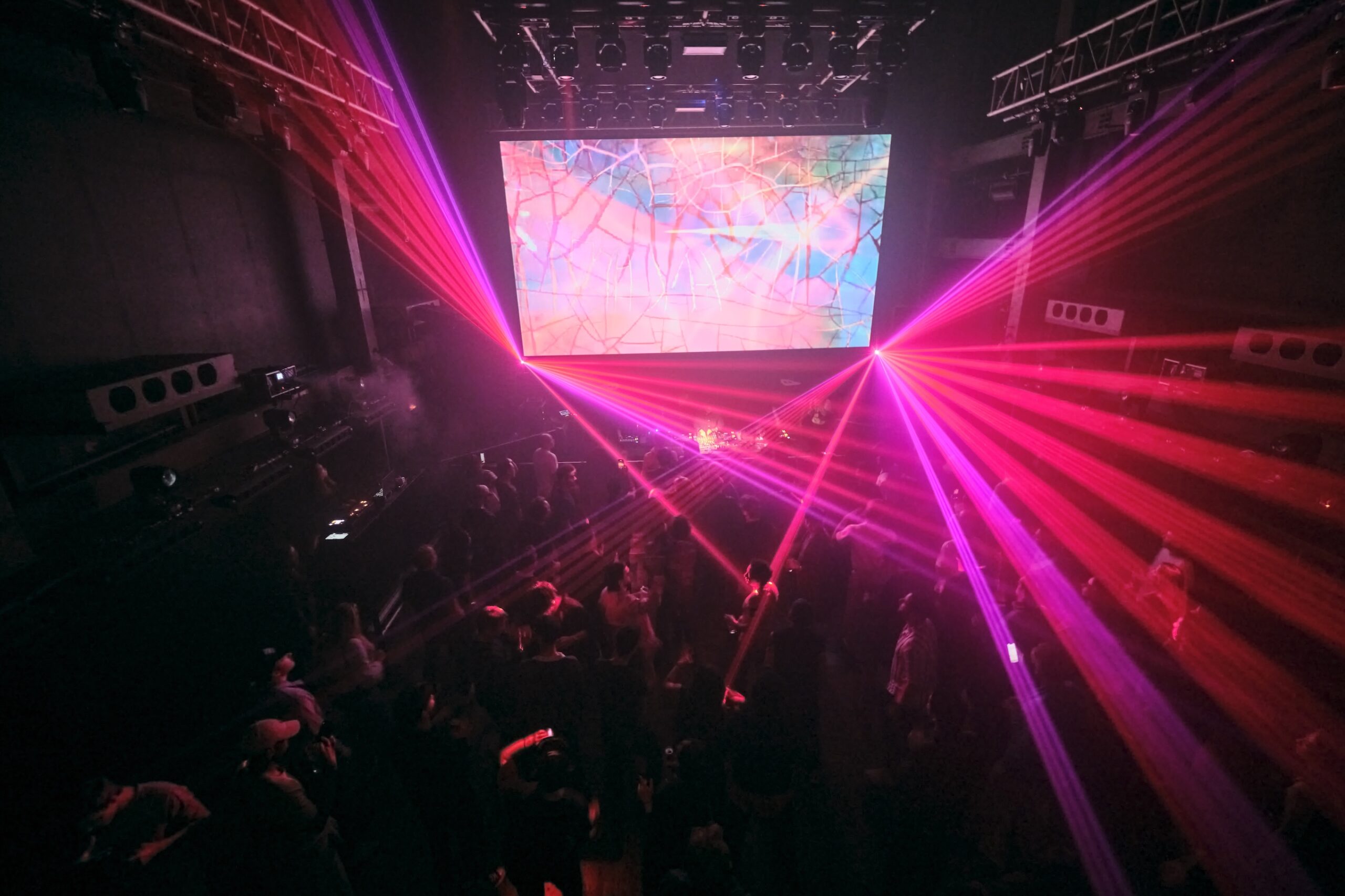
WOMB
Four-floor Shibuya club, since 1999. Asia's largest mirror ball on the main floor, a Funktion-One rig, 25 years of being the techno-tourist's first stop in Tokyo.

TESHIMA ART MUSEUM
Ryue Nishizawa's concrete shell on Teshima Island in the Seto Inland Sea. Rei Naito's water installation produces a near-imperceptible drip-and-flow soundscape. The room is the music.

FUJI ROCK FESTIVAL
Three days at the Naeba ski resort in the Echigo mountains. The Green Stage backs onto a river, forest stages wind through actual woodland. Asia's flagship destination festival since 1997.
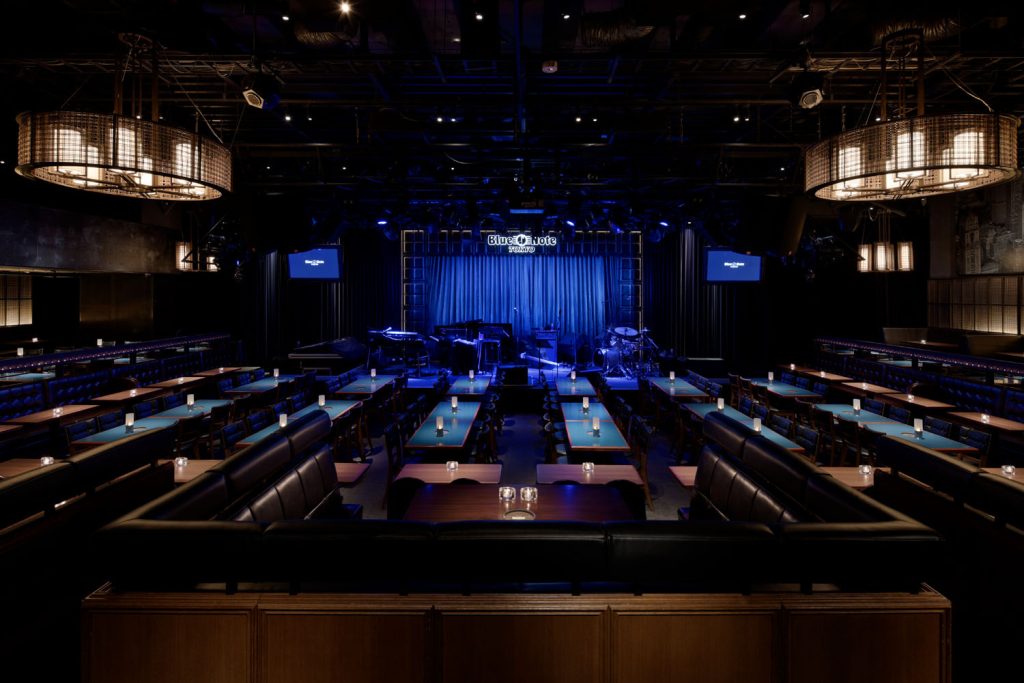
BLUE NOTE TOKYO
The Aoyama branch of New York's Blue Note since 1988. Low-ceilinged, candle-lit, two-set nights with players who would headline anywhere. Tokyo's best jazz venue by quiet consensus.
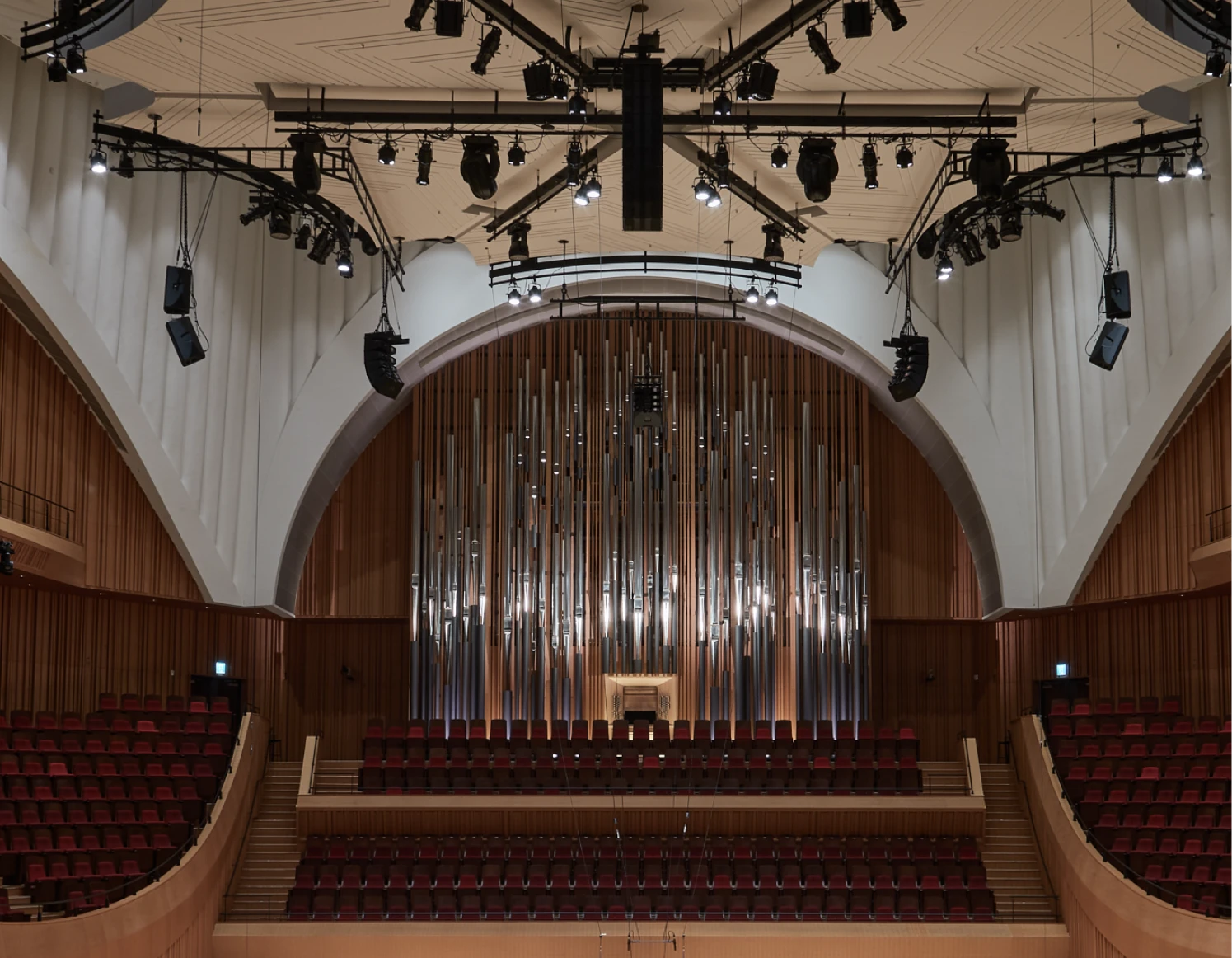
LOTTE CONCERT HALL
Korea's first vineyard-terrace hall, opened 2016 on the 8th floor of Lotte World Mall. A 5,000-pipe organ, a circular stage lift, and seating that puts the audience around (not in front of) the orchestra.
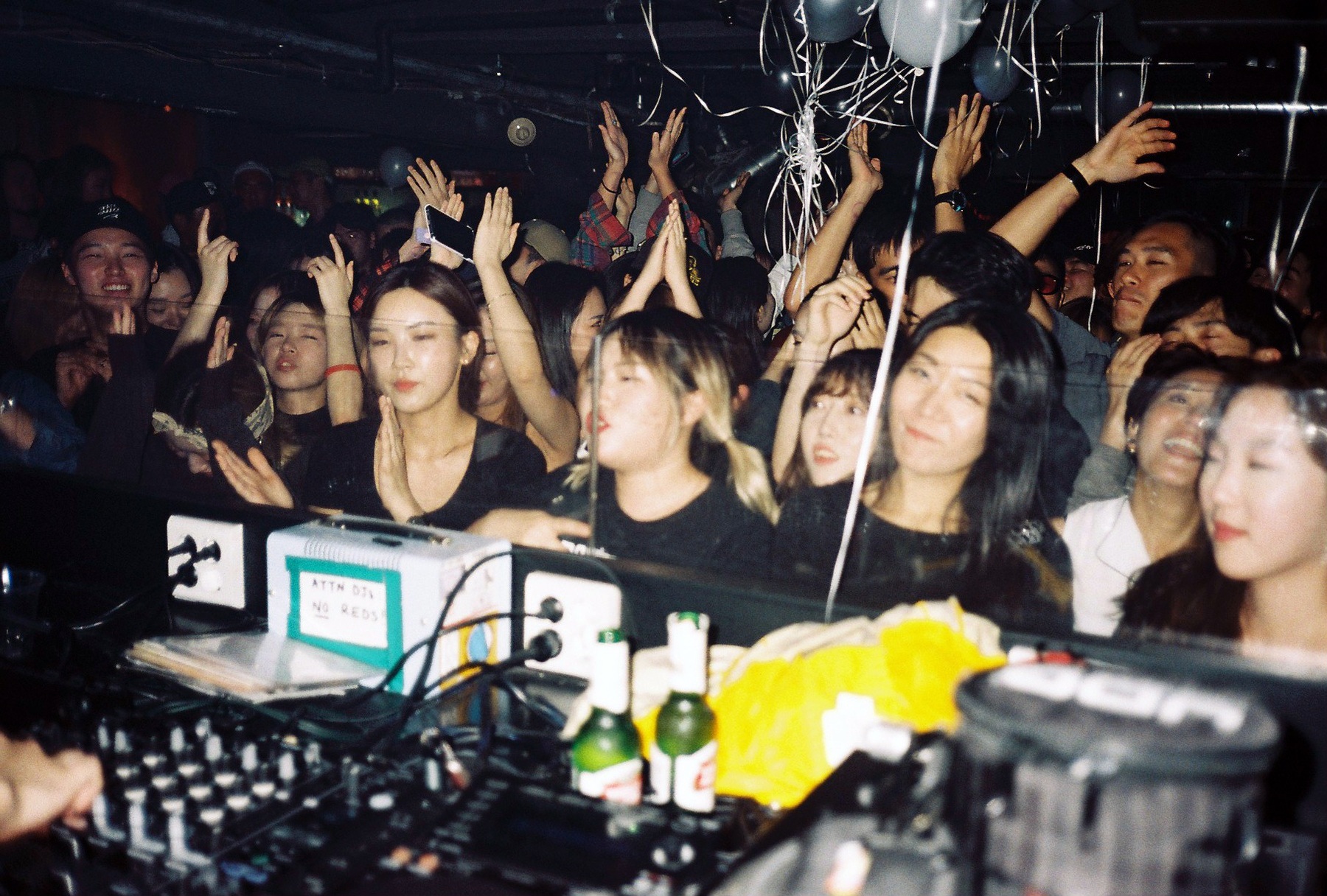
CAKESHOP
Windowless basement under Itaewon's main strip, since 2012. The room that defined Seoul's club export, where international hip-hop and bass acts make their first Korean stop.

NCPA BEIJING
Paul Andreu's 2007 titanium-and-glass dome rising from an artificial lake. You enter via an underwater tunnel and surface inside three halls (Opera, Concert, Theatre) under one shell.

CHAPEL OF SOUND
Open Architecture's 2021 cliff-side concert hall in the Chengde mountains, two hours from Beijing. A semi-open amphitheatre cast from pebble-aggregate concrete, shaped to channel the wind, the rain, the bird call into the music.

SHANGHAI SYMPHONY HALL
Arata Isozaki architecture and Yasuhisa Toyota acoustics, opened 2014. Partially sunken in the French Concession, with a 1,200-seat main hall and a 400-seat chamber room next door.

HONG KONG CULTURAL CENTRE CONCERT HALL
Home of the Hong Kong Philharmonic. 2,019-seat fan-shaped hall on the Tsim Sha Tsui waterfront. The largest mechanical pipe organ in Asia (8,000 pipes).

CLOCKENFLAP FESTIVAL
Three-day festival on the Central Harbourfront. The Hong Kong skyline is the back wall of every stage. The densest big-city festival skyline in the world.
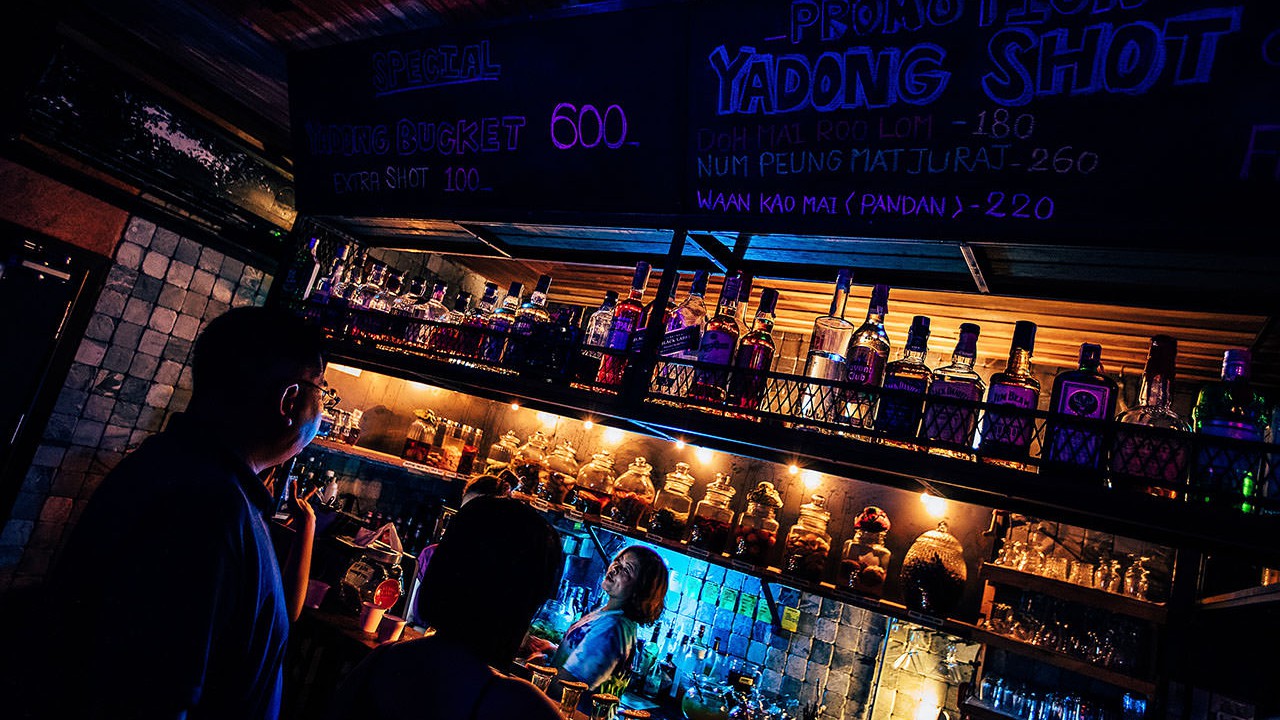
STUDIO LAM
Maft Sai's tiny Sukhumvit Soi 51 bar above Zudrangma Records. The city's headquarters for Thai mor lam revival and Asian psych-funk on original vinyl.
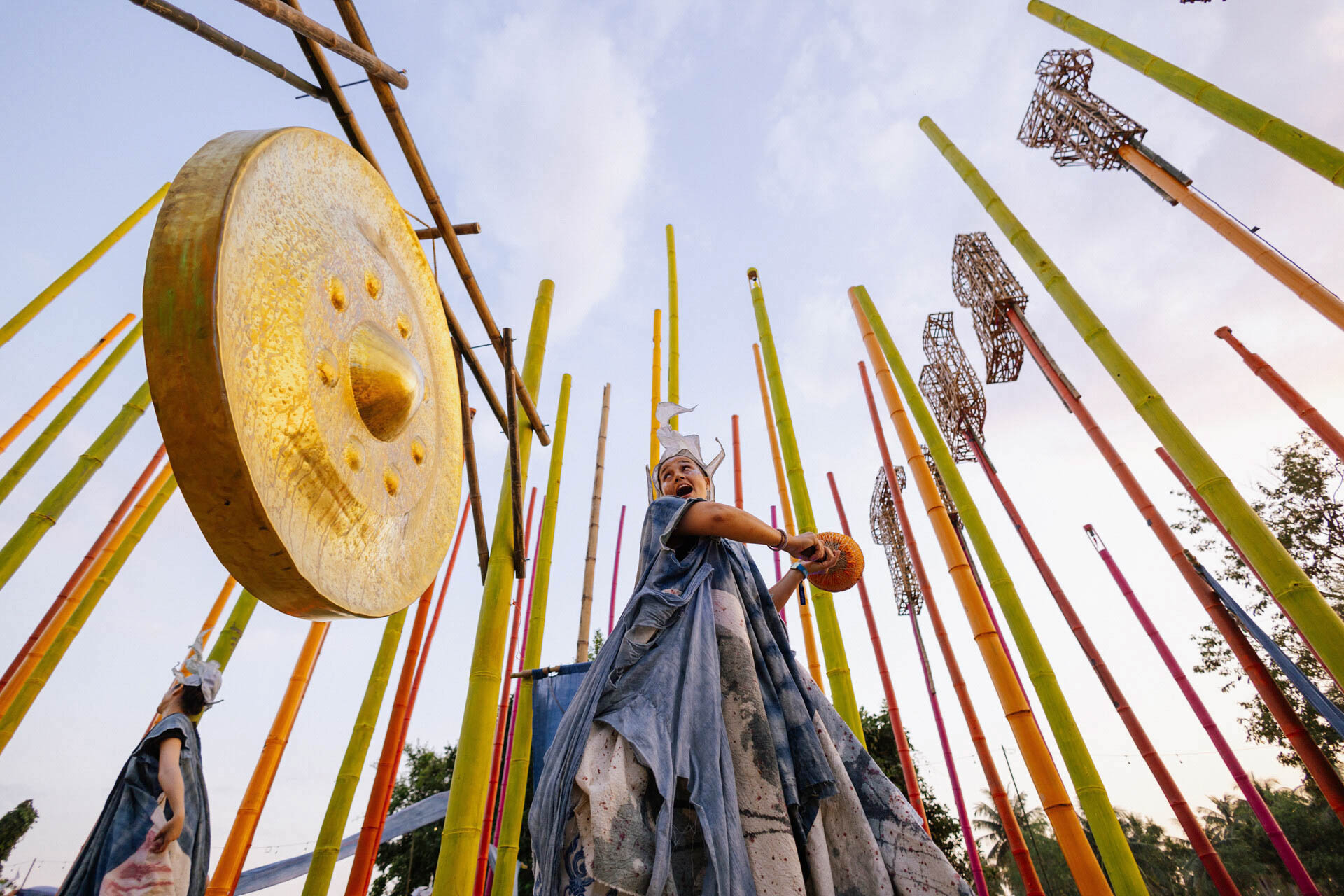
WONDERFRUIT FESTIVAL
Four days on the Fields at Siam Country Club outside Pattaya. Bamboo-architecture stages, sustainability ethos, programming closer to Burning Man than EDM.

HANOI OPERA HOUSE
1911 French colonial-built scaled-down Palais Garnier in the centre of Hanoi. The Renaissance Revival exterior is one of the most-photographed buildings in Indochina, the interior holds up acoustically.

ROYAL BALLET THEATRE LUANG PRABANG
Performance theatre inside the former Royal Palace in Luang Prabang. Masked dance with live court orchestra (khene, gongs, drums) in a UNESCO-protected town that goes to bed at 10pm.

ESPLANADE THEATRES ON THE BAY
Twin spiked-glass domes on Marina Bay, opened 2002. Russell Johnson / Artec acoustics in the 1,600-seat Concert Hall. An acoustic canopy that can be lowered to tune the room.
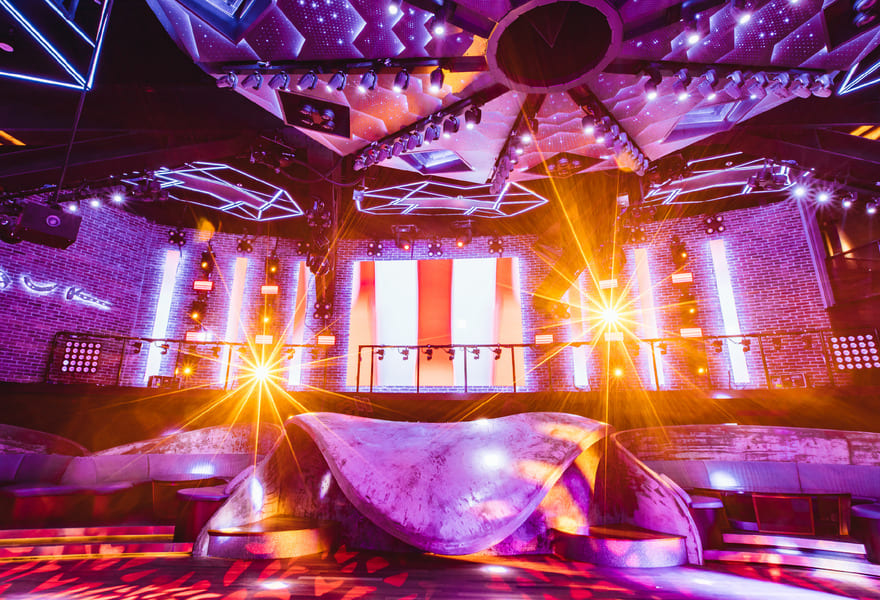
ZOUK SINGAPORE
Asia's longest-running superclub, founded 1991. Moved to Clarke Quay in 2016. Two-room layout (Zouk Main + Phuture).

DEWAN FILHARMONIK PETRONAS
920-seat shoebox concert hall on the second floor of the Petronas Twin Towers, opened 1998. Malaysia's first dedicated classical hall, home of the Malaysian Philharmonic Orchestra.

UBUD ROYAL PALACE (PURI SAREN AGUNG)
Nightly gamelan-and-dance in the open courtyard of the still-occupied Ubud royal family palace. Full-village gamelan orchestra, court-trained dancers, plastic chairs ten feet from the gongs.
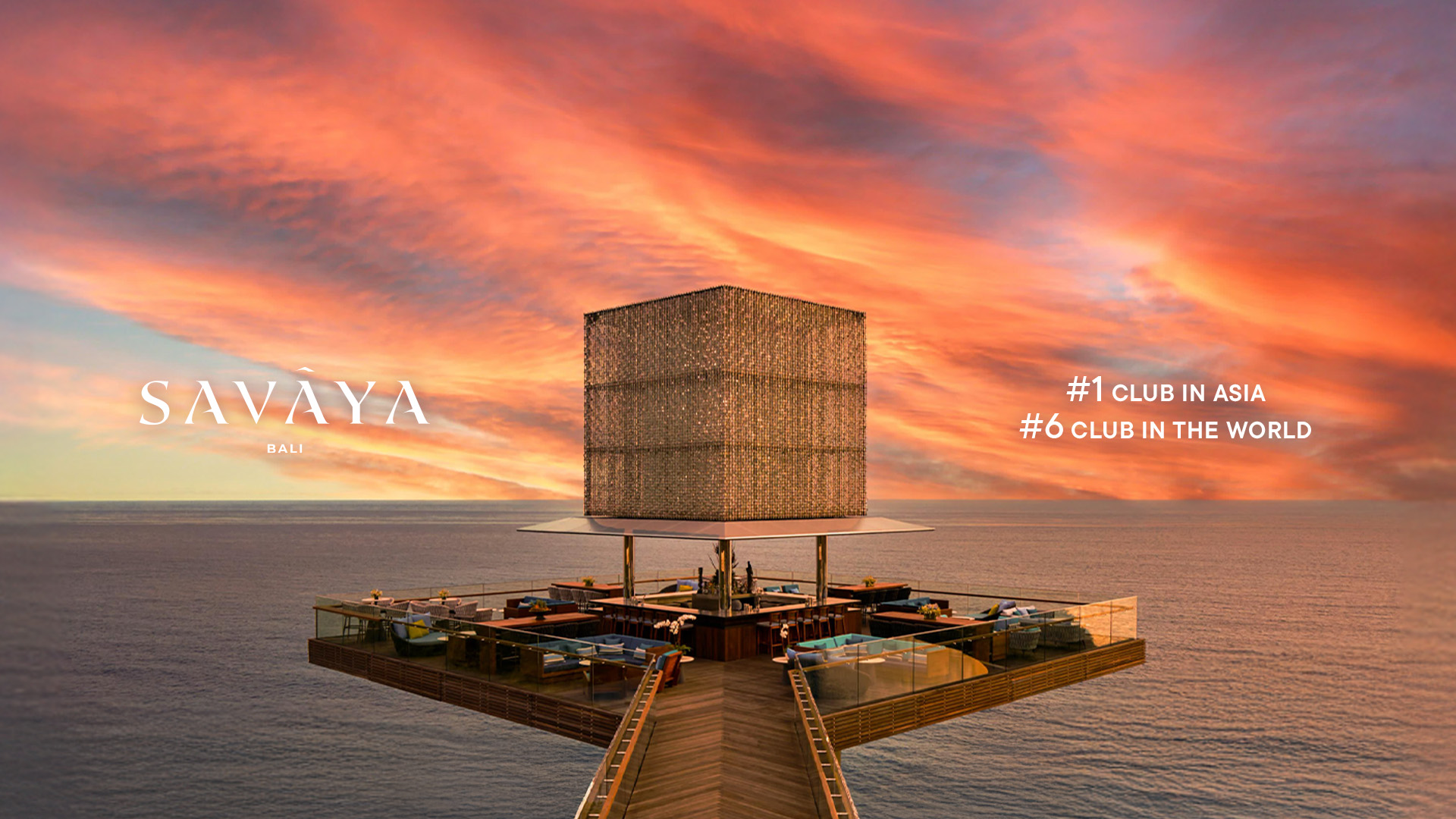
BALI CLIFFSIDE SOUND SANCTUARY
An immersive cliffside open-air sound space on the Uluwatu peninsula. Tiered stone terraces, the Indian Ocean as backdrop, programming that runs from sunrise sound baths to sunset DJ sets.

NCPA MUMBAI (TATA THEATRE)
India's first multi-venue arts centre, opened 1969 on Nariman Point. The 960-seat Tata Theatre has a semi-circular thrust stage with no proscenium or curtain, designed for classical Indian acoustics.

MAGNETIC FIELDS FESTIVAL
Three days inside a 17th-century Rajasthani palace. The courtyards become stages, the ramparts become viewing platforms, peacocks walk the lineup. December.

ZIRO FESTIVAL OF MUSIC
Four days in the Ziro Valley of Arunachal Pradesh. Open-field stages, indigenous Apatani village hosting, terraced rice paddies as backdrop. September.
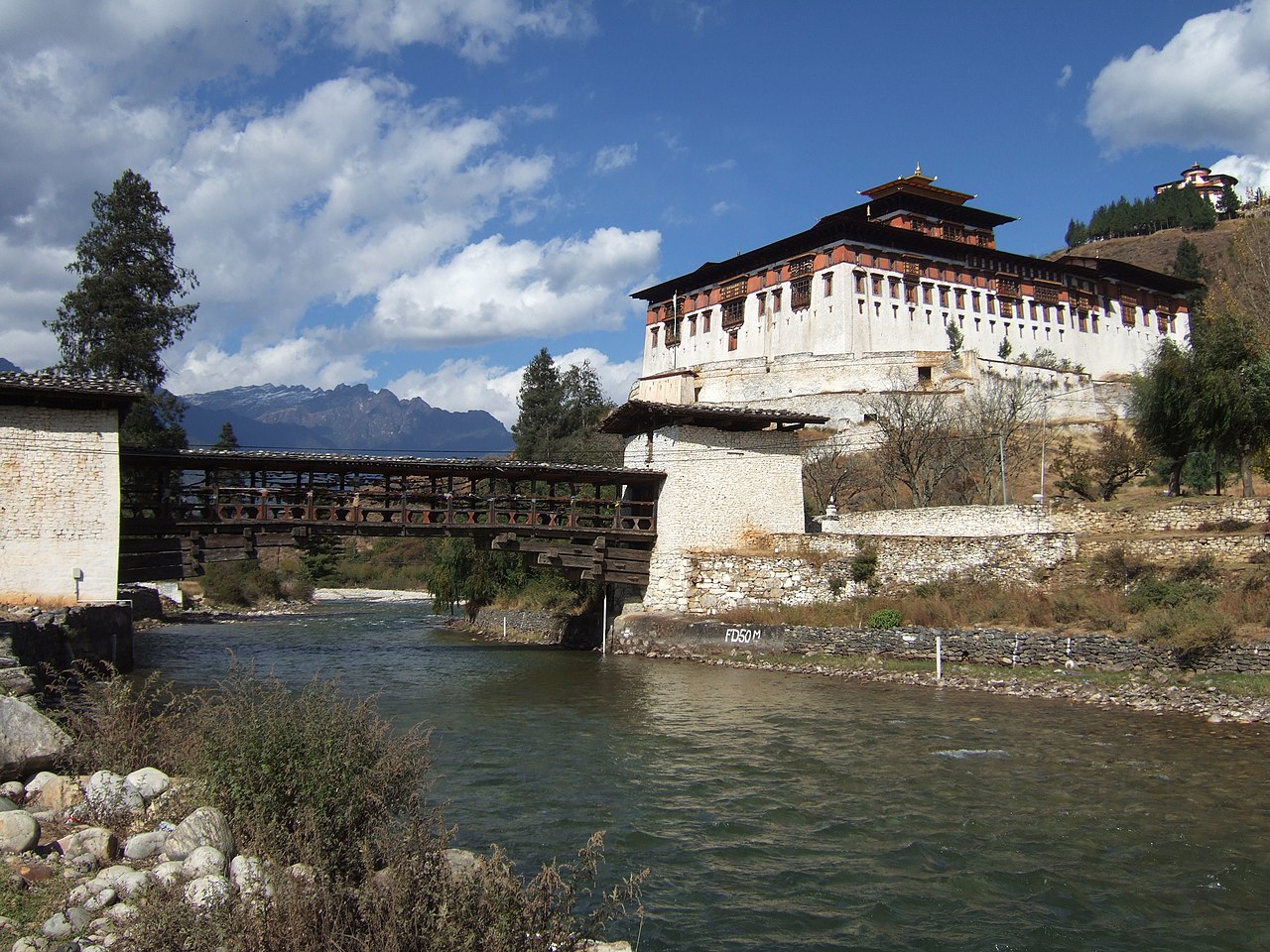
PARO TSHECHU
Annual five-day spring tshechu at Paro Dzong. Masked monks dance to long-trumpet drone, cymbal and drum in the dzong's open courtyard with the Himalayas as the upstage wall. March-April.
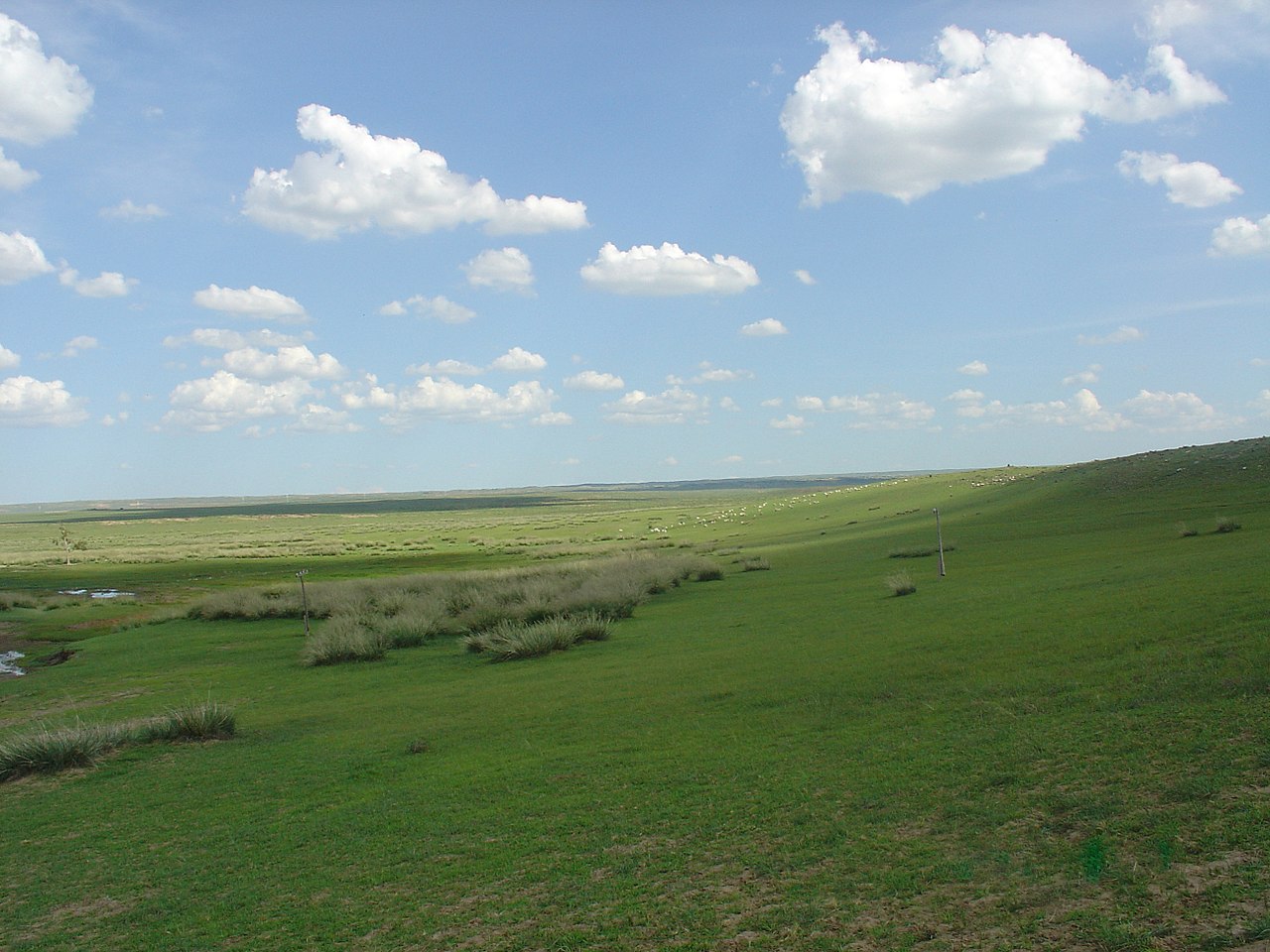
PLAYTIME FESTIVAL
Mongolia's flagship music festival, held in the Gachuurt Valley outside Ulaanbaatar. Three days, multiple stages, programming that runs Mongolian rock and indie alongside throat-singing and traditional ensembles.

WADI RUM RESONANCE
An open-air resonance space in Wadi Rum's protected desert. Bedouin oud and rebab nights, programmed by local guides under sandstone walls 200m tall. The desert is the venue.

YINYANG MUSIC FESTIVAL (GREAT WALL)
Annual three-day boutique electronic festival held literally on top of the Great Wall of China at the Huangyaguan section. Yin and Yang stages built into the battlements, mainstage at the foot of a Wall castle. 1,000-cap. September.

BASILICA HUDSON
An 1880s riveted-iron foundry on the Hudson River, repurposed by Melissa Auf der Maur into a year-round arts venue. Industrial cathedral, all forged steel and broken light.
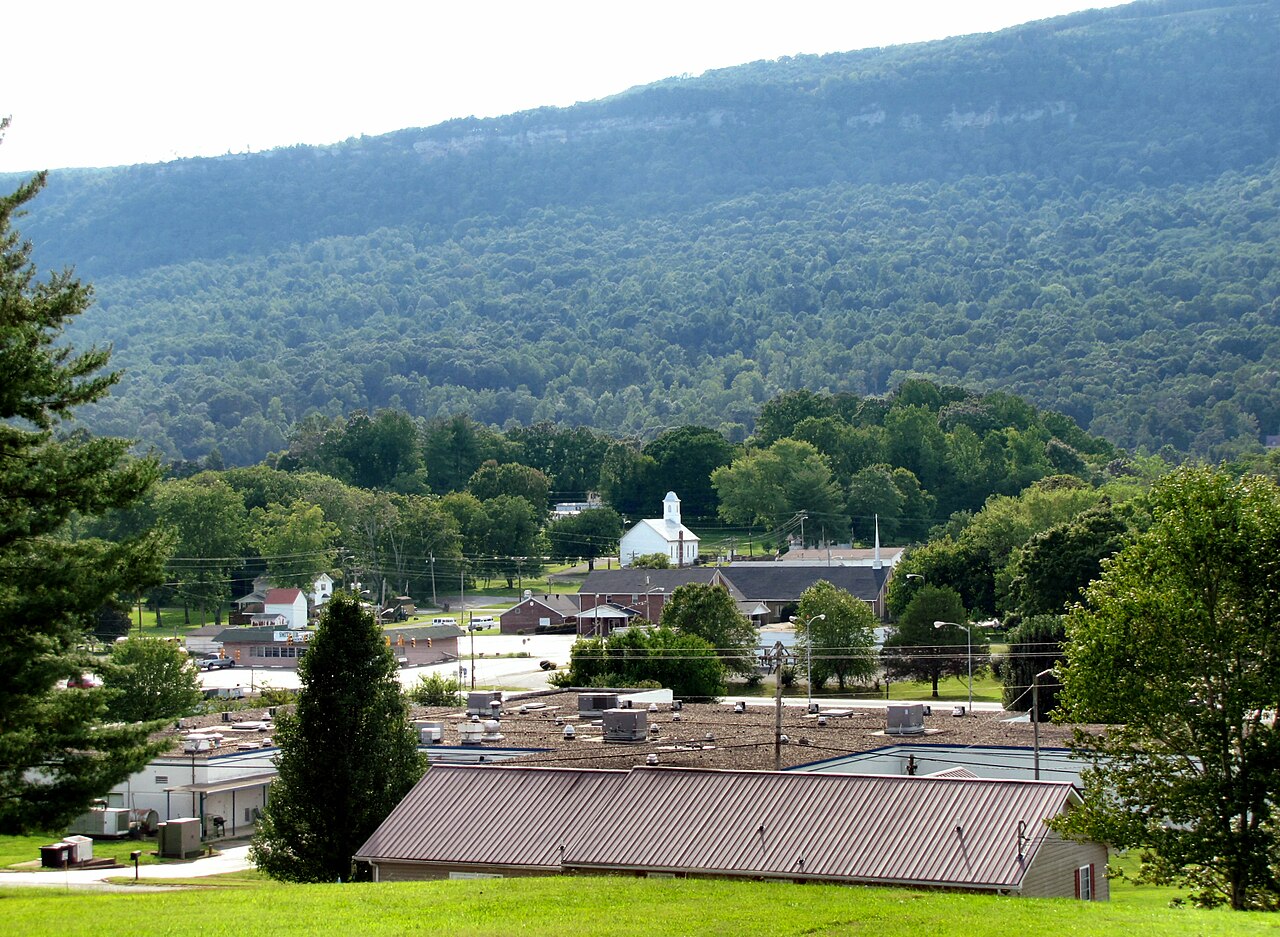
THE CAVERNS
A 333-ft-deep subterranean amphitheatre in Big Mouth Cave on the Cumberland Plateau. Home of Bluegrass Underground, where stalactites do the reverb work.

CARNEGIE HALL
1891 Italian Renaissance Revival concert hall on 7th Avenue. Plaster-and-wood acoustics so balanced engineers still bring tape recorders just to hear the room.

WALT DISNEY CONCERT HALL
Frank Gehry's stainless-steel origami above Bunker Hill, opened 2003. Yasuhisa Toyota acoustics, Douglas-fir interior, home of the LA Philharmonic.

RED ROCKS AMPHITHEATRE
Two 300-ft red sandstone monoliths framing a stage at 6,450 ft elevation, west of Denver. A natural amphitheatre 300 million years in the making.

RYMAN AUDITORIUM
1892 revival-meeting tabernacle, home of the Grand Ole Opry 1943-1974. Curved pine pews, brick walls, original stage. The Mother Church of Country Music.

VILLAGE VANGUARD
Wedge-shaped basement jazz club on 7th Avenue South, opened 1935. 123-capacity. More than 100 live records cut here, Coltrane and Bill Evans among them.
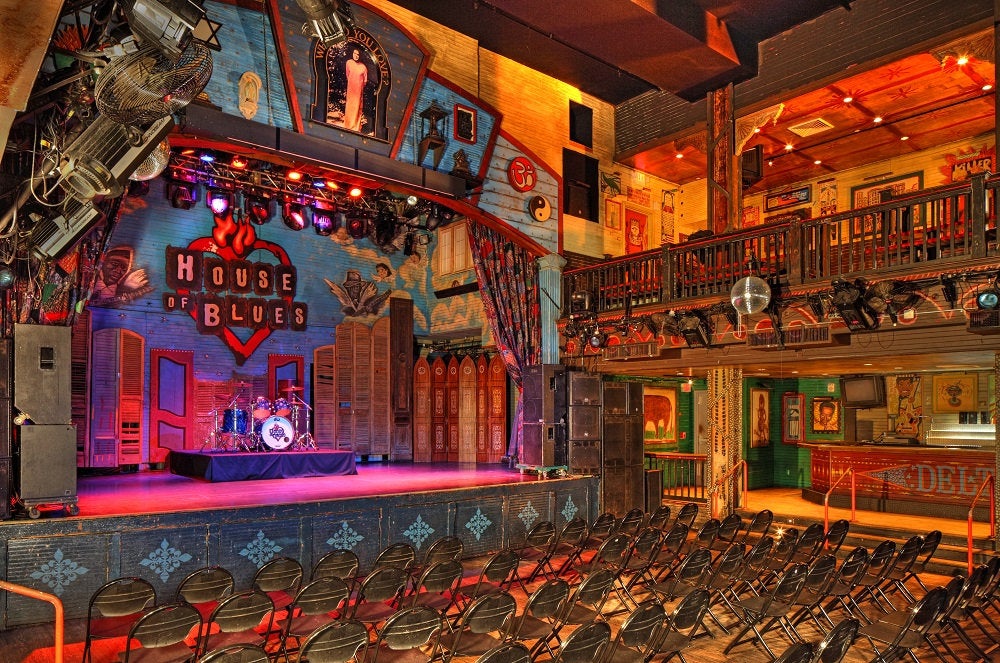
HOUSE OF BLUES NEW ORLEANS
French Quarter flagship of the House of Blues chain since 1994. Every wall a quilt of Mississippi-Delta outsider art. Sunday Gospel Brunch is the room's signature.

NEWPORT JAZZ FESTIVAL AT FORT ADAMS
George Wein's 1954 jazz festival, the world's first, held inside the granite ramparts of an 1841 coastal artillery fort overlooking Narragansett Bay.

BURNING MAN
70,000-person temporary city on an ancient lakebed in the Black Rock Desert, Nevada. Built and burned annually. Robot Heart's sunrise sets are the world's most-photographed dawn in electronic music.

TEMPLO MAYOR SESSIONS
Occasional sound and music sessions held at the Templo Mayor archaeological site at the heart of Mexico City. Mesoamerican pre-Hispanic music programmed on the Aztec ruins.
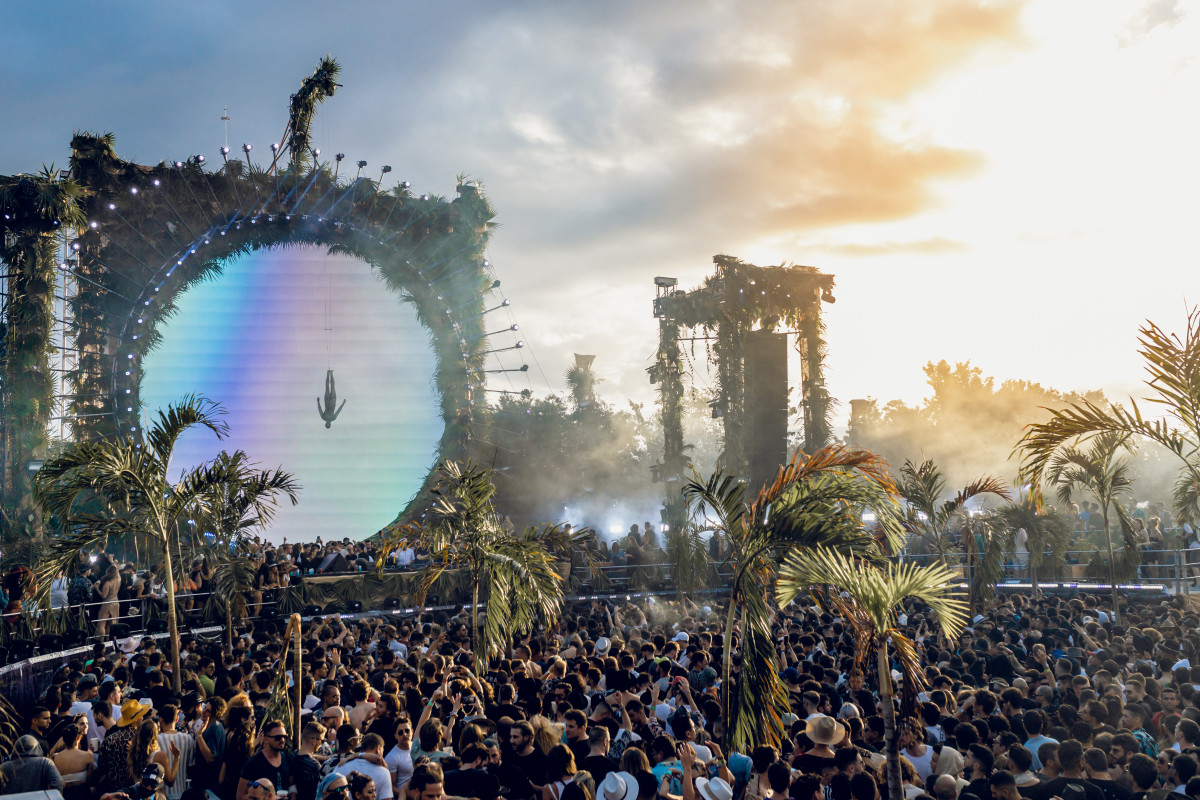
ZAMNA TULUM
Eight-week-long jungle festival series in the Yucatán, Dec-Feb. Cenote-blue lighting, Mayan-stone-stage references, the post-2018 Tulum melodic techno blueprint.

CHICHÉN ITZÁ (EL CASTILLO)
1,000-year-old Mayan pyramid whose central staircase produces a chirped echo. Clap once at the foot of the steps; the pyramid returns the call of the resident quetzal bird.

THEATRO MUNICIPAL DO RIO DE JANEIRO
1909 Belle Époque opera house in Cinelândia, modelled on the Paris Opéra. Stained-glass dome, gilded foyer, plush-red horseshoe seating.

SAMBÓDROMO DA MARQUÊS DE SAPUCAÍ
Oscar Niemeyer's 1984 concrete parade canyon, purpose-built for Rio Carnival samba schools to march their 4,000-strong baterias past at 130 BPM.

WARUNG BEACH CLUB
Bali-architecture beach club on the Brazilian Atlantic coast, opened 2002. Wood-and-bamboo build, Funktion-One rig, Tale of Us / DGTL Brasil residencies.

TEATRO COLÓN
1908 Buenos Aires opera house, ranked among the world's top five acoustic spaces. 1.7-second reverb, Carrara marble, Slavonian oak, horseshoe seating.

TEATRO MUNICIPAL DE SANTIAGO
1857 Neoclassical opera house in central Santiago, survived two earthquakes and one fire. Home of the Orquesta Filarmónica de Santiago.

TEMPLE OF THE MOON (HUAYNA PICCHU)
Ceremonial cave carved into the back face of Huayna Picchu, behind Machu Picchu. Flat-stone altar, granite walls, near-twenty-second reverb on a single pututu blast.

SACRED VALLEY FREQUENCY
The loose circuit of ecstatic-dance halls and ceremonial gatherings across Peru's Sacred Valley: La Columna Yucay, Apudance, full-moon circles at Ollantaytambo.
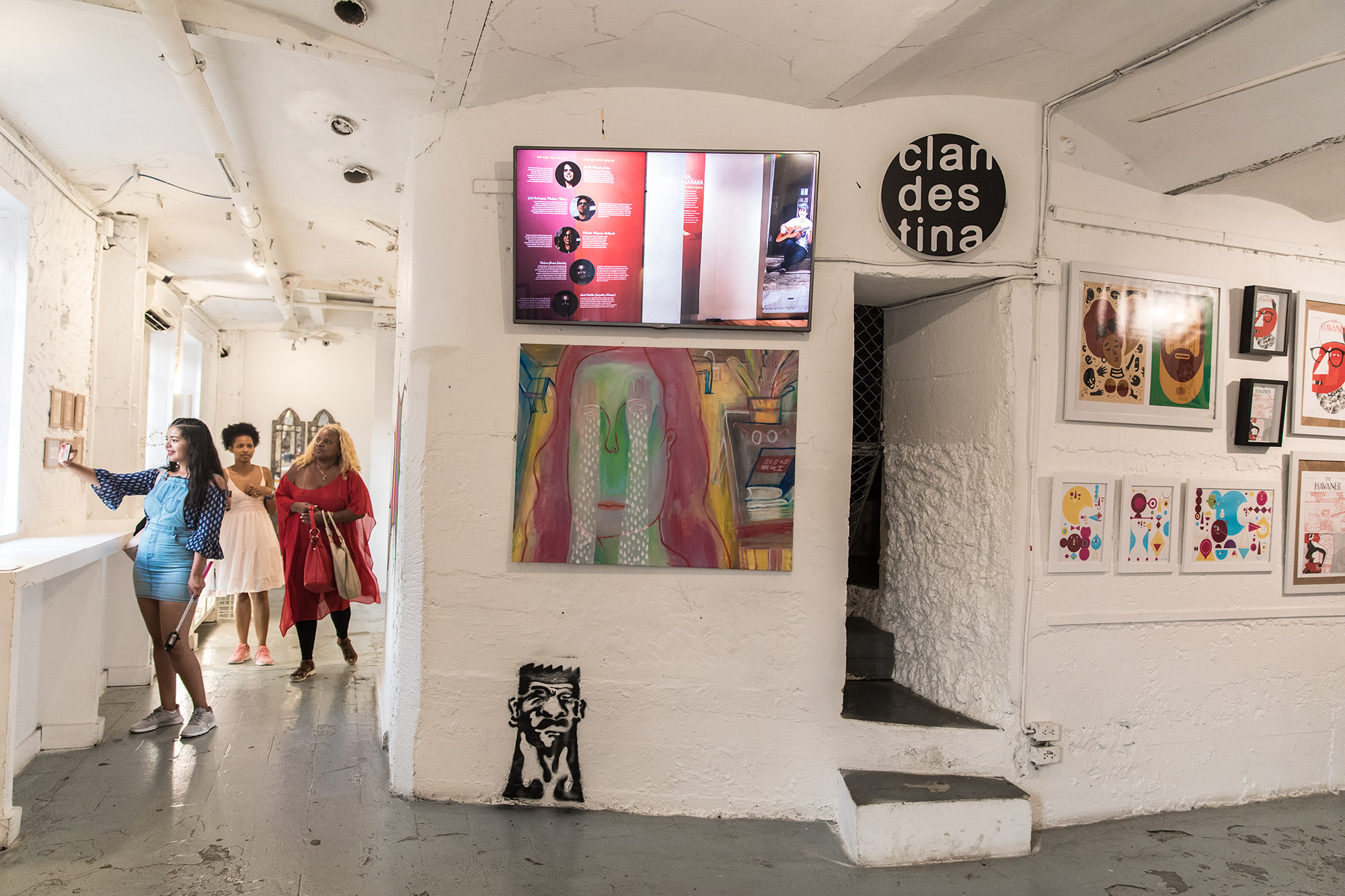
FÁBRICA DE ARTE CUBANO (FAC)
X Alfonso's 1940s converted cooking-oil factory in Vedado, Havana. Five rooms, eight events a night, the most important Caribbean music space of the 2010s-2020s.

THE BAMBOO CATHEDRAL
A 1km tunnel of arched bamboo on the old Chaguaramas military road, Trinidad. Planted by the US Navy in WWII, now a naturally-vaulted nave that creaks and clicks like a wind chime.

MASSEY HALL
1894 Moorish-Revival lyric hall in downtown Toronto. The room where Parker, Gillespie, Mingus, Powell and Roach cut Jazz at Massey Hall in 1953.

BANFF CENTRE FOR ARTS AND CREATIVITY
Mountain arts campus on Tunnel Mountain in Banff National Park. Eric Harvie Theatre + Rolston Recital Hall. Composers write residency pieces looking at Mount Rundle.

LOST BEACH CLUB
Cliffside open-air club in Montañita on Ecuador's Pacific coast. Built from sand, bamboo and Funktion-One. South America's secret cathedral of sound.

ELSEWHERE
Three-room Bushwick venue opened 2017, ex-warehouse, rooftop, two indoor floors. Heir to the New York underground after the closure of Output and 285 Kent.
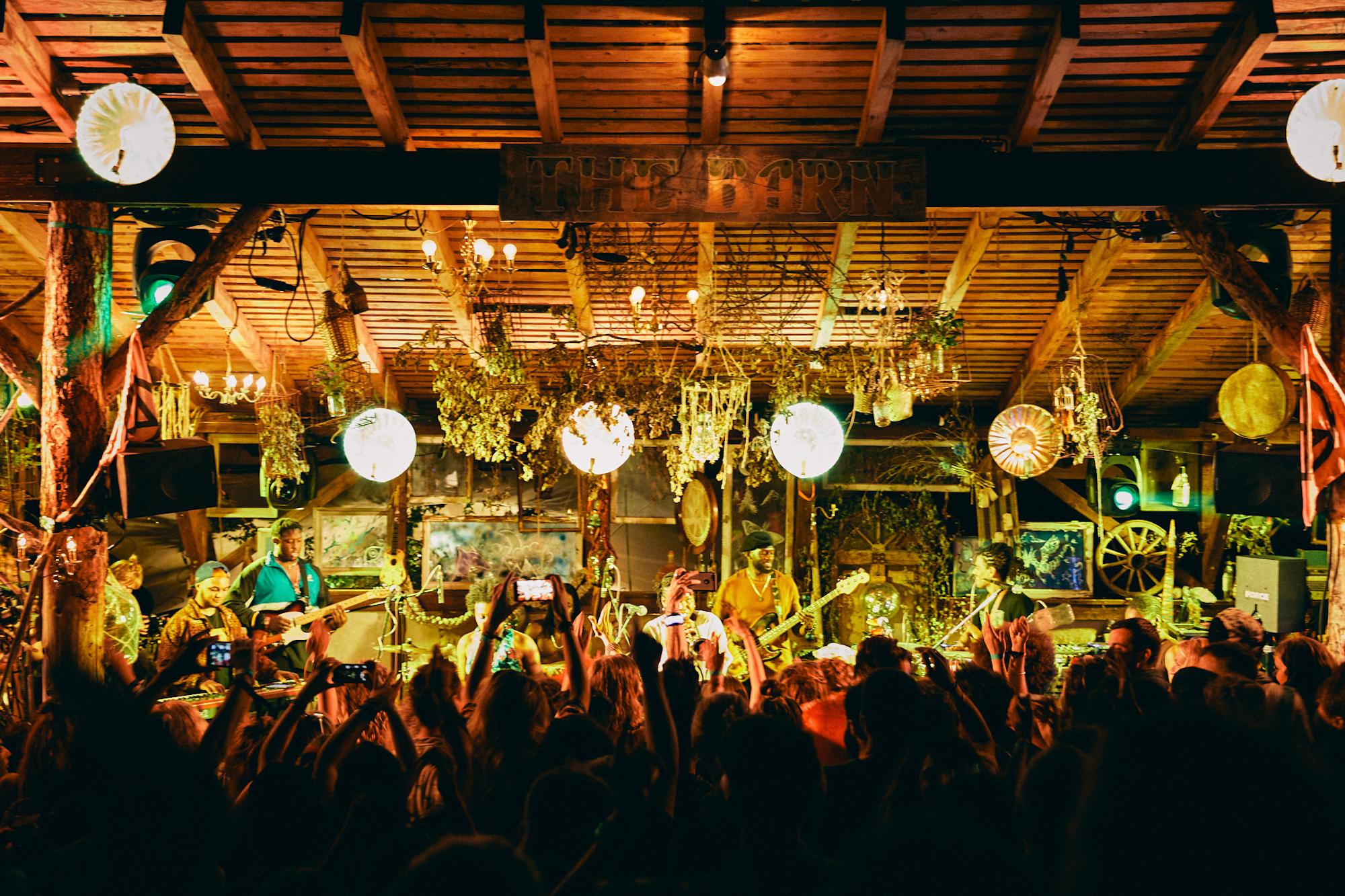
MEADOWS IN THE MOUNTAINS
Three-day boutique festival 1,500 metres up in the Bulgarian Rhodope mountains, June. Two stages built into the meadows above a 200-person village. The Sunrise Stage faces east across the valley.
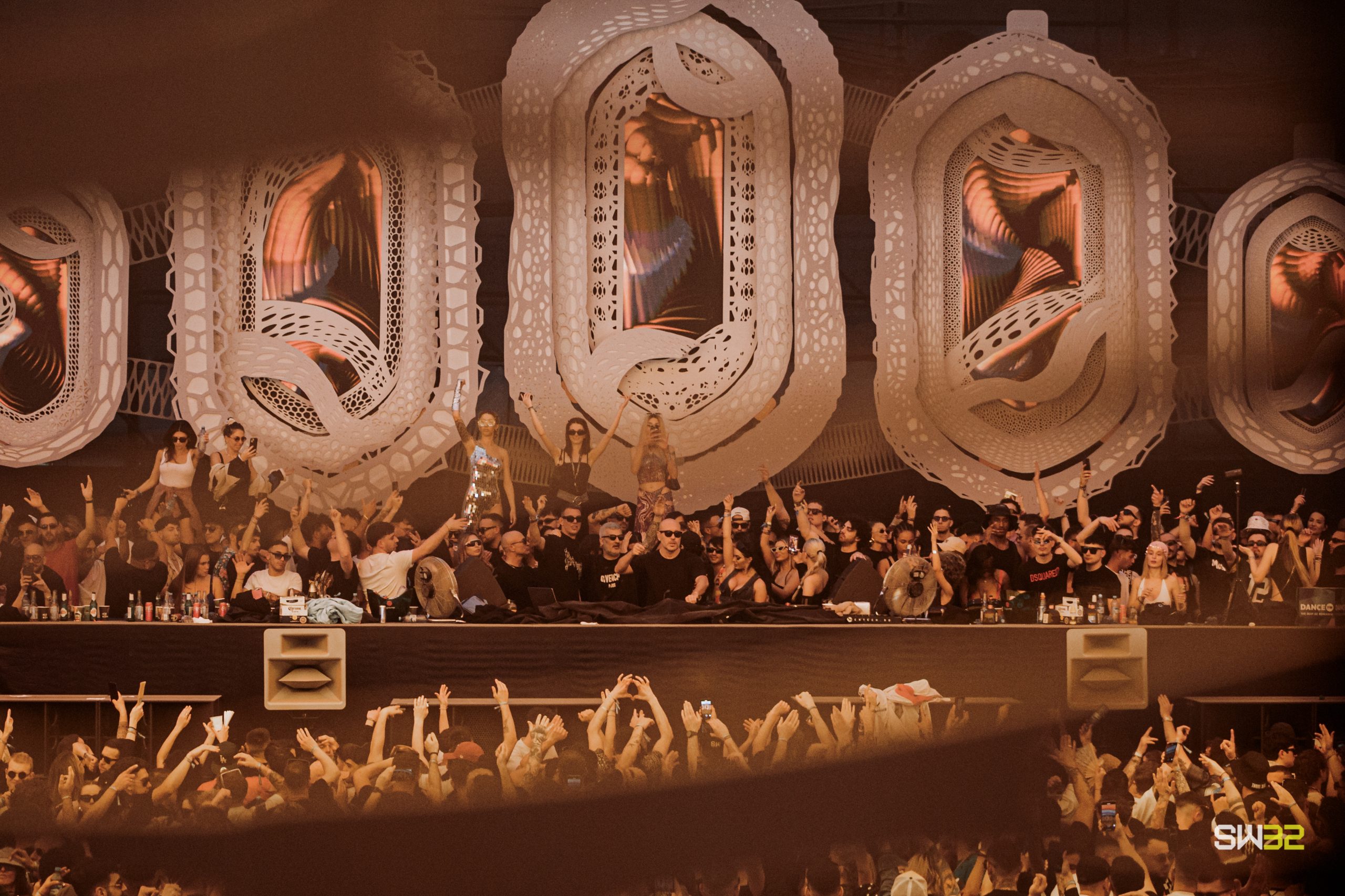
SUNWAVES FESTIVAL
Twice-yearly six-day open-air festival on the Romanian Black Sea coast at Mamaia. Spring (May) and autumn (September) editions. Birthplace of the Romanian minimal techno scene.
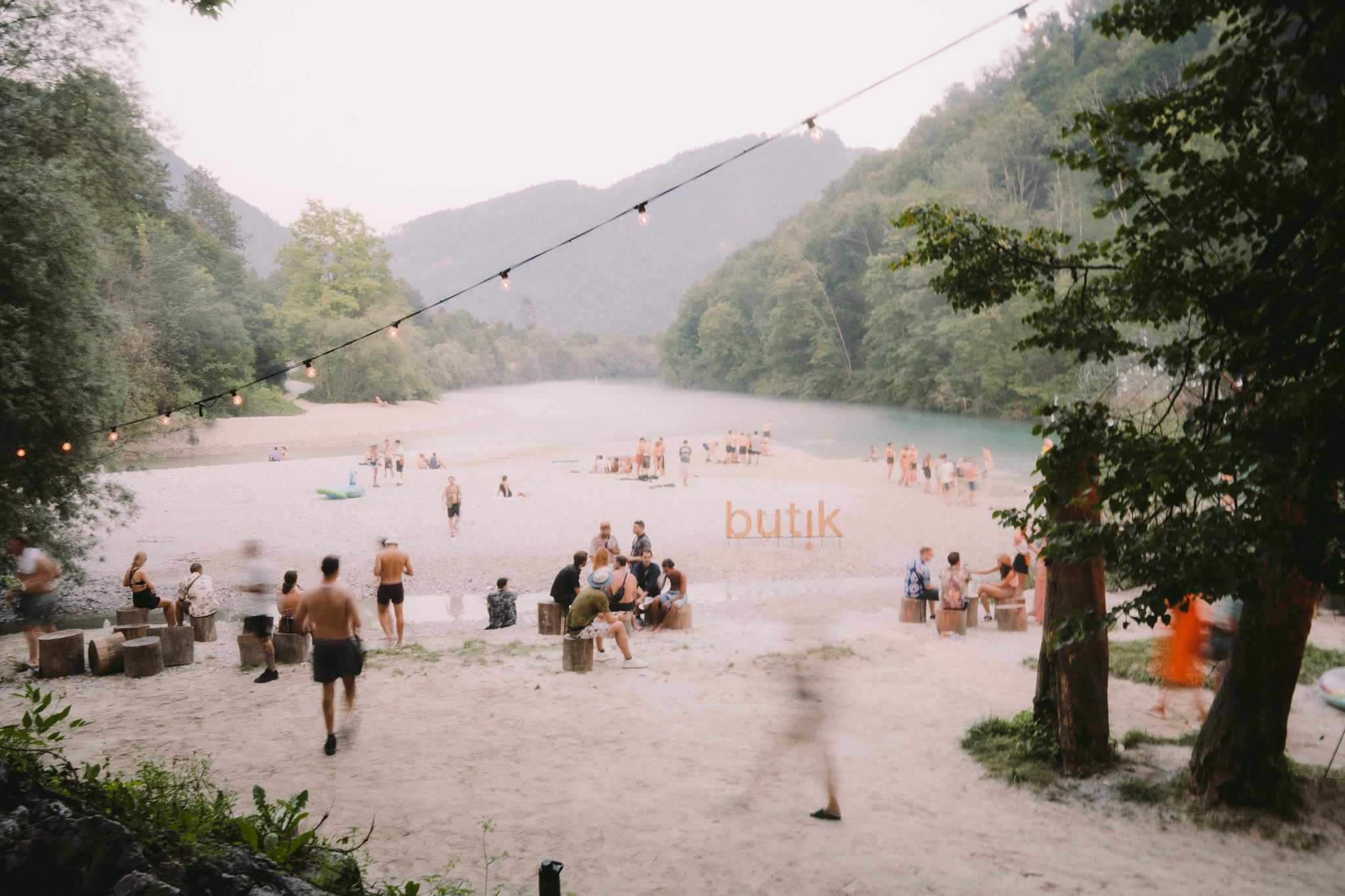
BUTIK FESTIVAL (TOLMIN, SOČA RIVER)
Butik is the boutique electronic festival at Sotočje, the confluence of the Soča and Tolminka rivers in the Slovenian Julian Alps. Five days each July, intimate cap, river swimming between sets. The site also hosts Sajeta, Tolminator, Punk Rock Holiday, OverJam, Sonica through the summer.
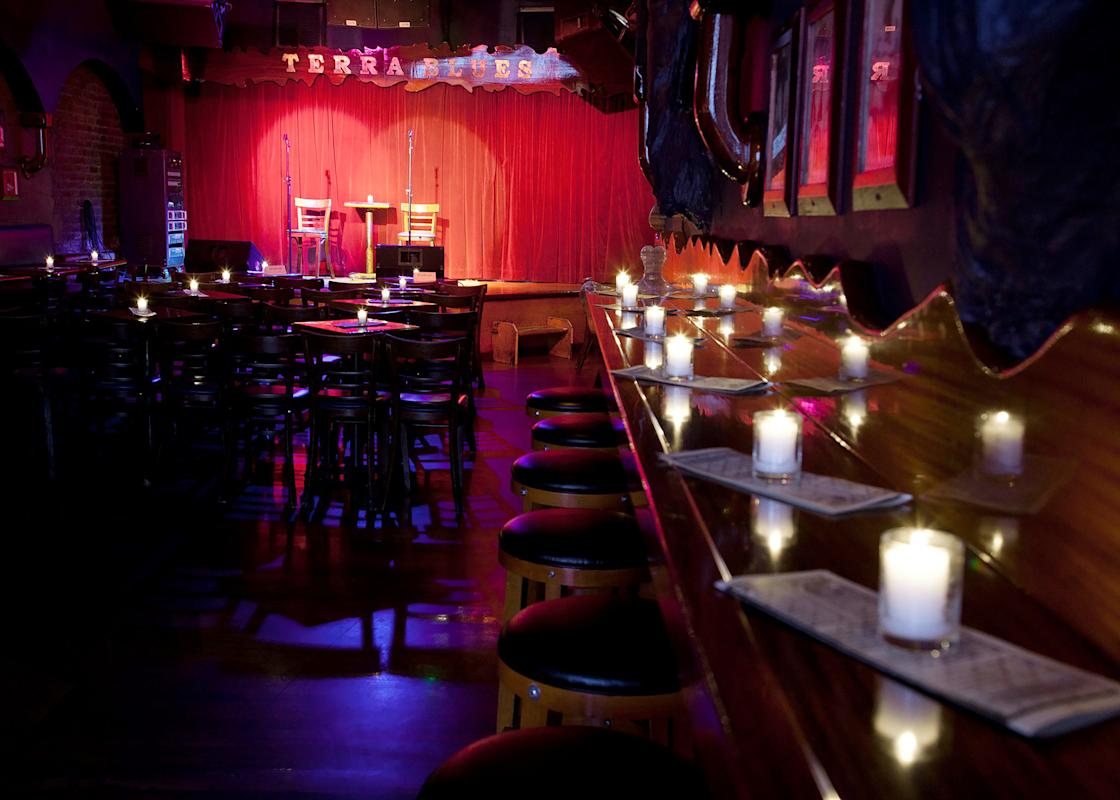
TERRA BLUES
Greenwich Village basement blues club on Bleecker Street, open since 1992. Two sets every night, acoustic at 7pm, electric at 10pm. The longest continuous blues residency in New York City.

KINGSTON MINES
Chicago's oldest continuously-operating blues club, open since 1968 in Lincoln Park. Two stages running simultaneously, one rotates while the other plays. Open until 4am.

SMALLS JAZZ CLUB
60-cap basement jazz club on West 10th Street, open since 1994. The most-recorded session room in the New York jazz scene of the past 25 years. SmallsLIVE streams every set.
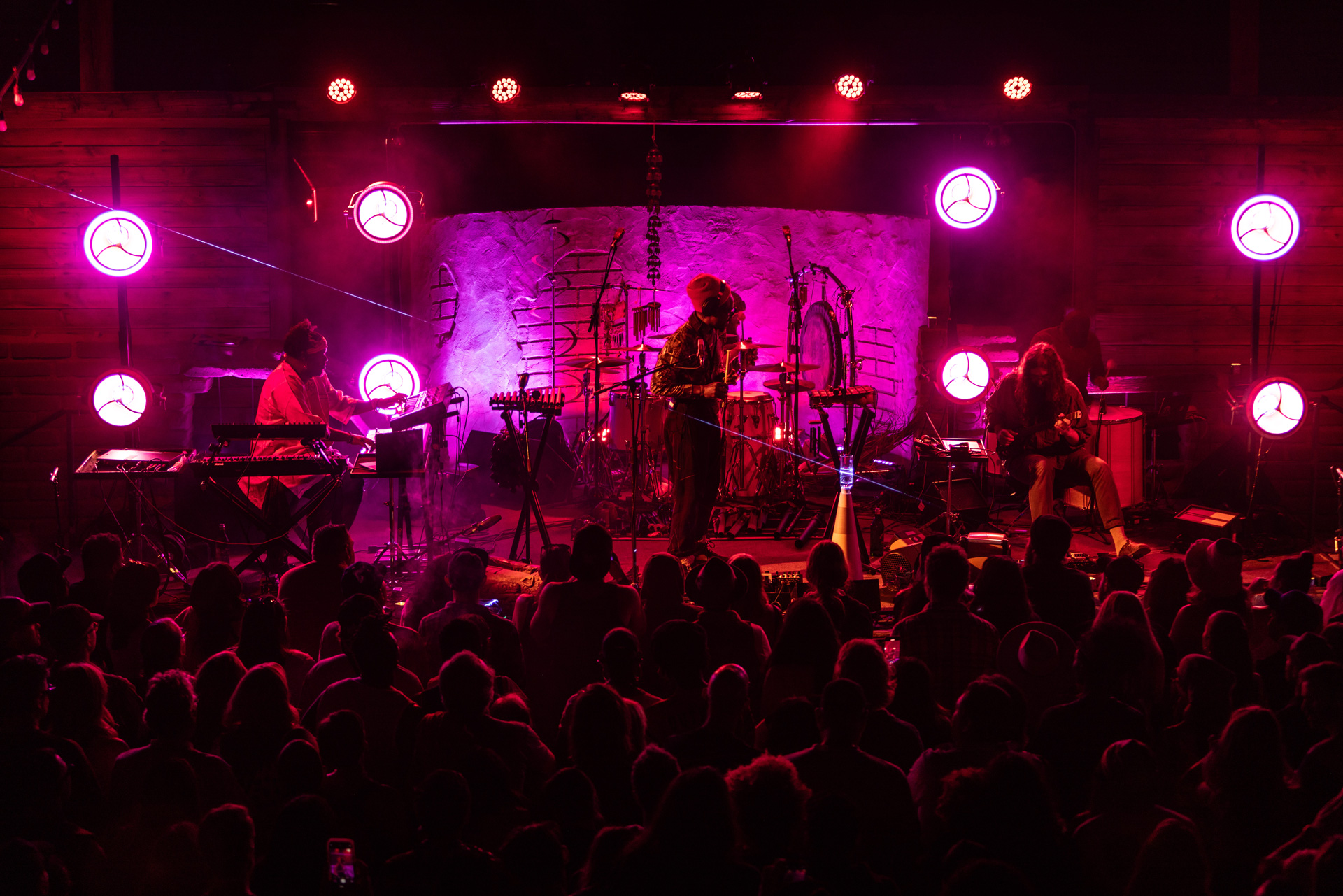
PAPPY AND HARRIET'S
Roadhouse and music venue in Pioneertown, California, a 1940s Western film set on the high Mojave above Joshua Tree. Open since 1982, 250-cap room. Paul McCartney and Robert Plant have played here unannounced.

THE GORGE AMPHITHEATRE
27,500-cap natural amphitheatre carved into the cliffs above the Columbia River Gorge in central Washington State. Opened 1986. Routinely voted the most beautiful concert venue in North America.
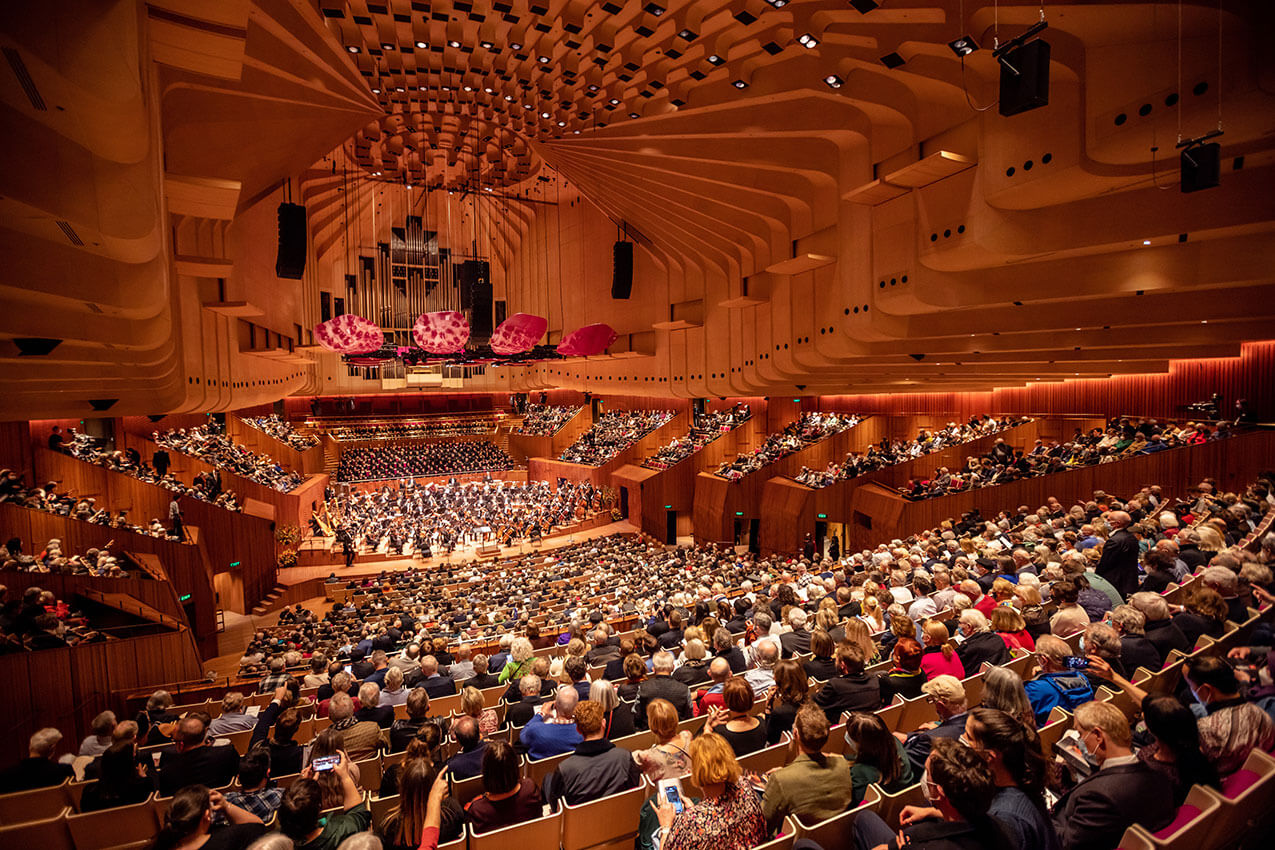
SYDNEY OPERA HOUSE
Jørn Utzon's billowing concrete sails on Bennelong Point, opened 1973. The renovated Concert Hall (reopened 2022) sounds as good as the roof looks, with birch-veneered acoustic petals tuning the room in real time.

MELBOURNE RECITAL CENTRE
ARM Architecture's 1,000-seat shoebox in Southbank, opened 2009. Plywood tree-bark interior, Arup-tuned acoustics. Cited by working soloists as the cleanest small-room sound in the southern hemisphere.

HAMER HALL (ARTS CENTRE MELBOURNE)
Roy Grounds' 1980s underground concert hall, redesigned 2012 by ARM as a sequence of cantilevered timber drums. 2,466 seats sunk three storeys below the Yarra floodplain. Melbourne Symphony Orchestra's home.

ADELAIDE FESTIVAL CENTRE
John Morphett's 1973 white-tetrahedron roof on the Torrens, the southern hemisphere's first multi-venue arts complex. Sister sculpture to Sydney's sails. Anchor of WOMADelaide each March.

PERTH CONCERT HALL (IWELAM)
Howlett & Bailey's 1973 brutalist temple in raw concrete and warm jarrah. Recently renamed Iwelam (Noongar for place of music). Houses the largest mechanical-action pipe organ in the southern hemisphere.

QPAC CONCERT HALL
Robin Gibson's 1985 modernist complex on the South Bank. 1,600-seat fan-shaped hall built around a 6,566-pipe Klais organ, the largest in Australia. The starry-night ceiling reflectors double as light sources.

CITY RECITAL HALL
1999 chamber shoebox tucked into Angel Place between two skyscrapers. The only purpose-built concert venue in Sydney since the Opera House. Australian Brandenburg Orchestra home.

WOMADELAIDE
Annual world-music festival in Botanic Park since 1992. Stages spread under 200-year-old Moreton Bay figs whose buttress roots make natural amphitheatres. Four days every March.

BLUESFEST BYRON BAY
Easter-weekend festival on the Tyagarah Tea Tree Farm, 11 km north of Byron Bay. Six big-top tents in rolling pasture, Pacific paddock-away. The medicinal-herb smell at dawn is part of the listening.

DARK MOFO (MONA HOBART)
Two-week midwinter festival at David Walsh's MONA museum, June each year. Subterranean Berriedale gallery becomes the engine room for ritualised noise, fire, and ceremonial swimming.

ULURU (ANANGU COUNTRY)
The world's largest monolith, sacred to the Anangu people who have sung this country for at least 30,000 years. The rock itself is the world's most patient acoustic instrument. Public ceremonies are rare; the silence is the programme.
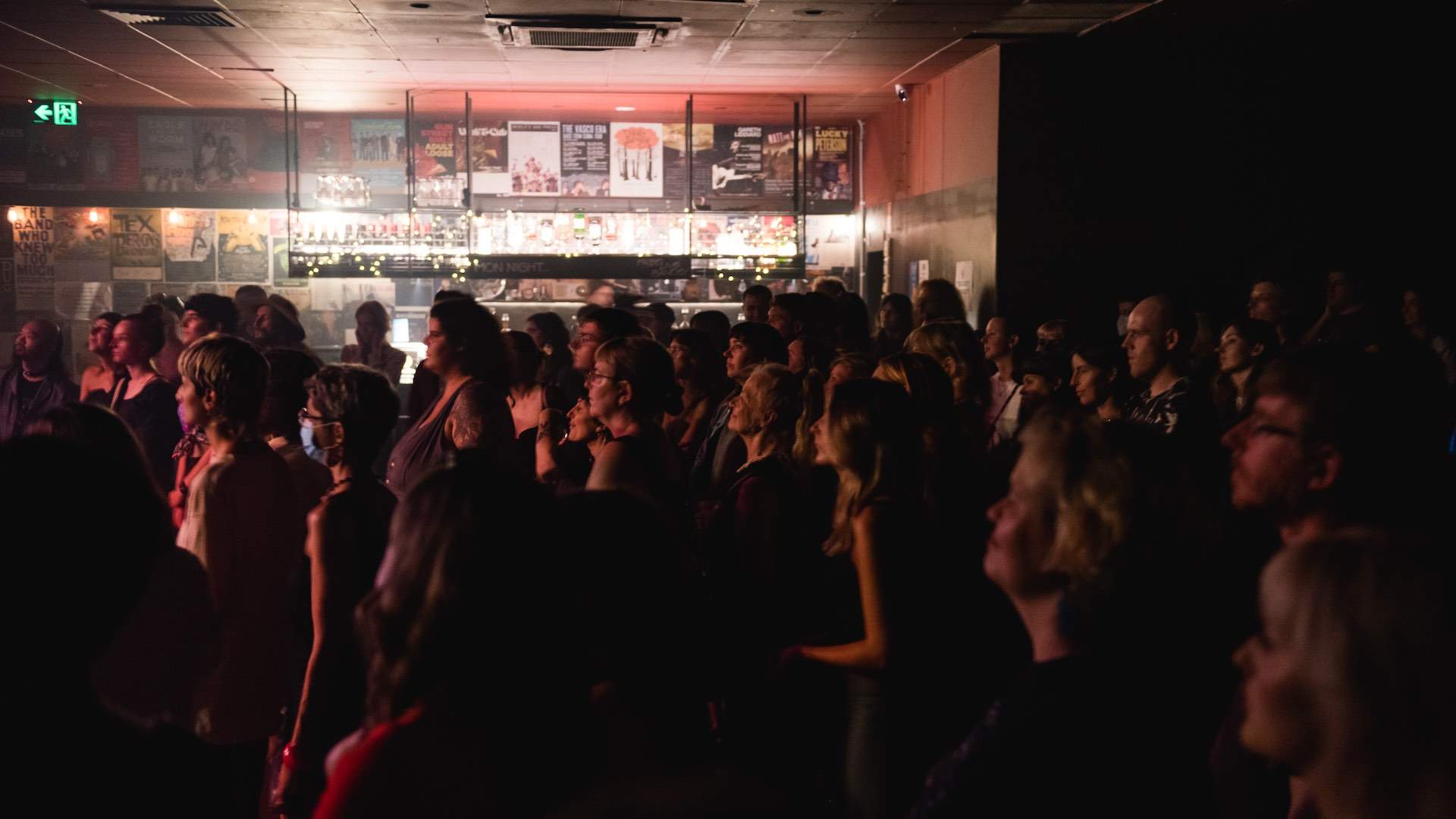
NORTHCOTE SOCIAL CLUB
250-cap pressed-tin-ceiling bandroom in the back of an 1854 hotel on High Street, Northcote. The prototypical Melbourne pub bandroom. Courtney Barnett, Big Thief, Phoebe Bridgers all played pre-arena.

KIRI TE KANAWA THEATRE (AOTEA CENTRE)
1990 postmodern complex on Aotea Square. The 2,139-seat Kiri Te Kanawa Theatre, renamed 2021 in honour of the Māori soprano, is the country's largest proscenium hall. Auckland Philharmonia Orchestra home.

MICHAEL FOWLER CENTRE
Sir Miles Warren's 1983 sculptural concrete drum on Civic Square. 2,209-seat tiered-fan auditorium, NZ Symphony Orchestra residency. The Cook Strait southerly is part of the experience at intermission.

CHRISTCHURCH TOWN HALL
Warren & Mahoney's 1972 modernist masterwork, restored NZ$167m and reopened 2019 after the 2011 earthquake. 2,494-seat in-the-round oval. The Harold Marshall ambiophonic acoustic prototype now used at Tokyo and Adelaide.

SPLORE FESTIVAL
Three-day boutique festival in February on Tāpapakanga Regional Park, a Hauraki Gulf beach 75 km east of Auckland. 8,000 attendees under ancient pōhutukawa trees. Programmed in partnership with Ngāti Whanaunga and Ngāti Pāoa iwi.

WOMAD AOTEAROA (BOWL OF BROOKLANDS)
Three-day world-music festival every March at the Bowl of Brooklands, a natural amphitheatre carved into native bush in Pukekura Park. Lake-facing main stage, audiences on grassy banks under fern groves.

TE MARAE O RONGOMARAEROA (TE PAPA)
Cliff Whiting's contemporary national marae inside Te Papa Tongarewa, the Museum of New Zealand. A wharenui that belongs to all iwi rather than one. Sunday afternoon kapa haka performances free and public.

CENTRE CULTUREL TJIBAOU
Renzo Piano's 1998 masterwork on the Tinu peninsula. Ten timber-and-steel huts up to 28 metres tall, ribbed like upturned Kanak ceremonial structures, tuned by the trade winds. Named for the assassinated Kanak independence leader Jean-Marie Tjibaou.

PLACE TO'ATĀ (HEIVA I TAHITI)
5,000-seat open-air amphitheatre on the Pape'ete waterfront. Heiva i Tahiti since 1881 runs three weeks of competitive 'ori Tahiti dance and hīmene singing every July with troupes of 100+ performers.

FEST'NAPUAN
Pacific's longest-running music festival since 1996. Four days every October at Saralana Park in central Port Vila. Free admission. The opening kastom (traditional) night is the most intimate.

WAIKIKI SHELL
Edwin Bauer's 1956 white concrete clamshell facing 2,400 seated and 6,000 on the lawn in Kapi'olani Park. Diamond Head behind the stage. Site of Hawaiian sovereignty concerts since the 1970s.

MERRIE MONARCH FESTIVAL
Most prestigious hula competition in the world. Annual since 1964 the week after Easter, in honour of King David Kalākaua. Hālau hula from Hawai'i, the US mainland, Japan and Aotearoa compete over four nights in Hilo.

BISHOP MUSEUM (HAWAIIAN HALL)
1889 Romanesque-revival hall built from local lava-stone. Three storeys of prized koa-wood display cases, a full-size sperm-whale skeleton suspended overhead. Kani ka pila slack-key sessions among the artefacts.

RAINBOW SERPENT FESTIVAL
Longest-running Australian transformational festival, since 1998. Four days annually in bush venue west of Melbourne, Victoria. Psytrance and electronic programming with strong art-installation and ceremonial elements.

SAJETA FESTIVAL
Slovenia's longest-running festival at the Soča/Tolminka river confluence in Tolmin. Since 1998. Four days of art, ambient, world music, jazz and electronic programming on the same site that hosts Butik, Tolminator, Punk Rock Holiday.