
SUNTORY HALL
Asia's most decorated vineyard-terrace concert hall, opened 1986. Karajan called it 'a jewel box of sound'. Anchor of the Japanese classical music scene and the acoustic blueprint for every modern Asian concert hall that followed.

SAPPORO CONCERT HALL KITARA
Vineyard-terrace masterpiece in Nakajima Park, Sapporo. Nagata Acoustics-designed in 1997, with terraced blocks that throw sound across every seat. The lobby's full glass wall makes the maples part of the concert.

BAR MARTHA
Tokyo's most uncompromising listening bar. House rules forbid loud talking, photos, and phones. The Klipschorn speakers and Garrard 301 turntable are treated like instruments.
WOMB
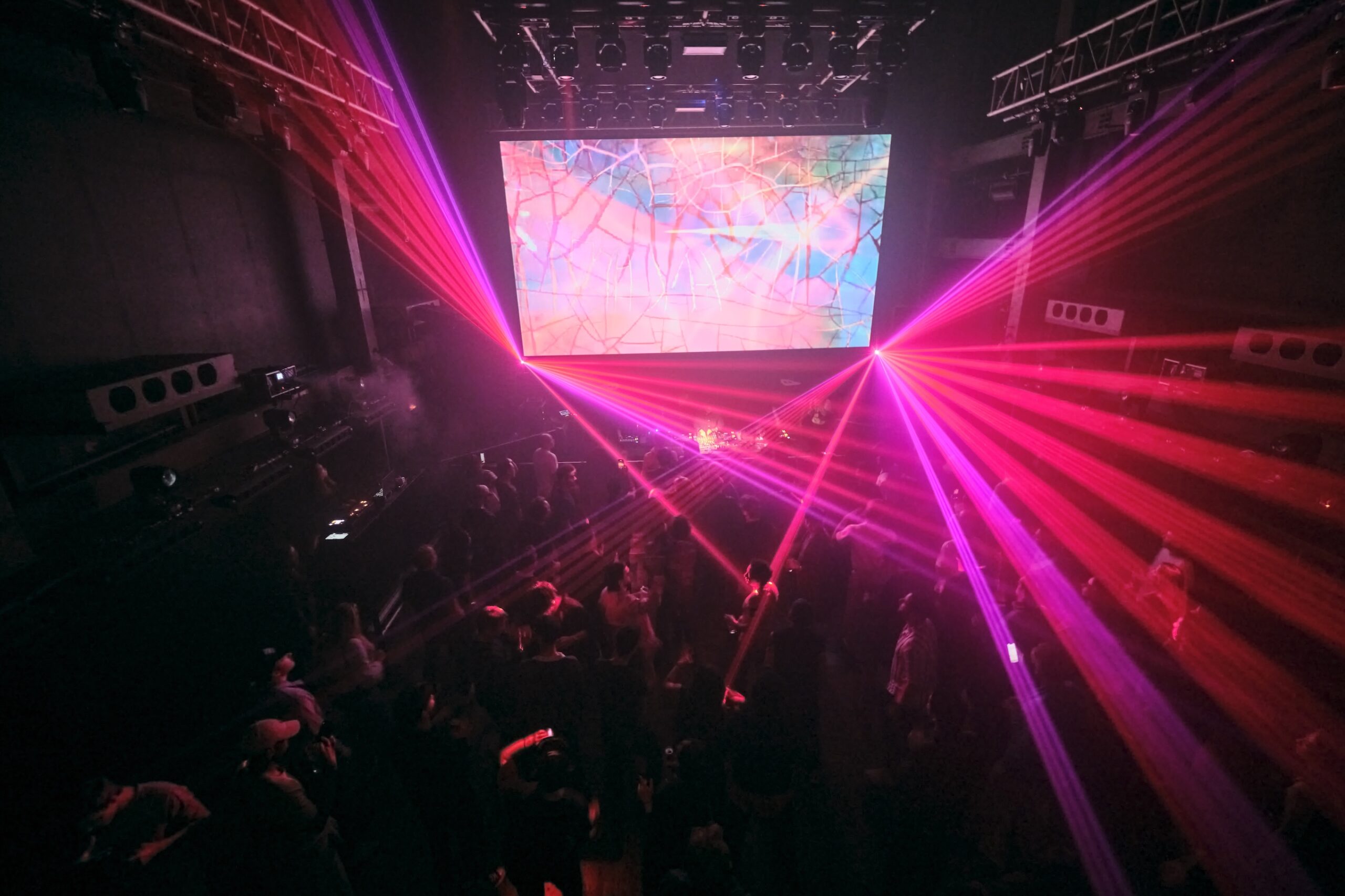
Four-floor Shibuya club, since 1999. Asia's largest mirror ball on the main floor, a Funktion-One rig, 25 years of being the techno-tourist's first stop in Tokyo.

TESHIMA ART MUSEUM
Ryue Nishizawa's concrete shell on Teshima Island in the Seto Inland Sea. Rei Naito's water installation produces a near-imperceptible drip-and-flow soundscape. The room is the music.

FUJI ROCK FESTIVAL
Three days at the Naeba ski resort in the Echigo mountains. The Green Stage backs onto a river, forest stages wind through actual woodland. Asia's flagship destination festival since 1997.
BLUE NOTE TOKYO
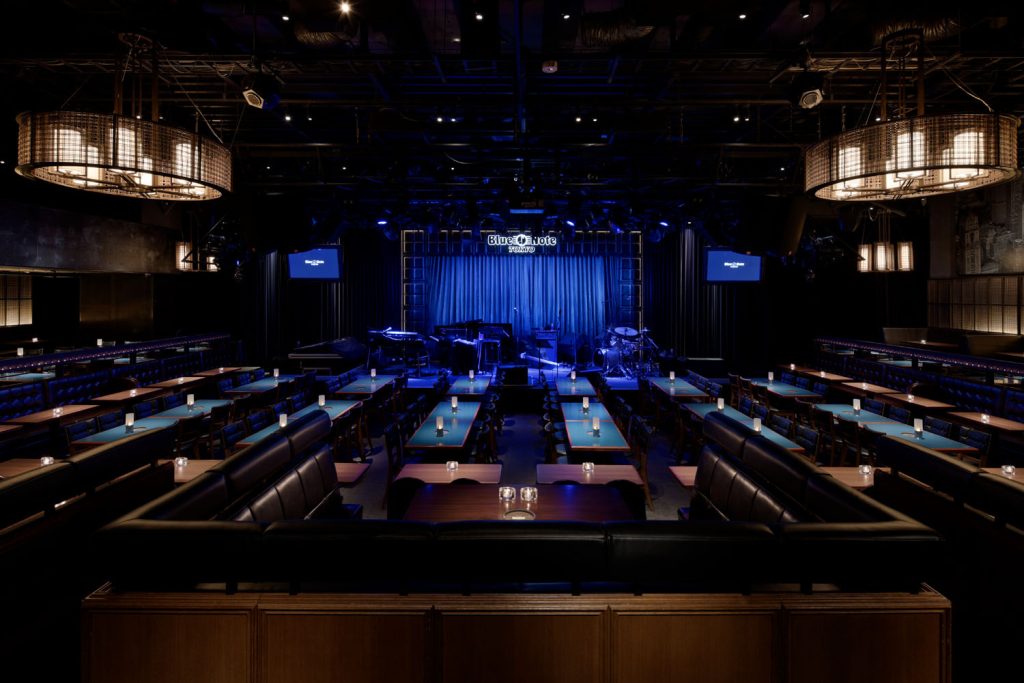
The Aoyama branch of New York's Blue Note since 1988. Low-ceilinged, candle-lit, two-set nights with players who would headline anywhere. Tokyo's best jazz venue by quiet consensus.
LOTTE CONCERT HALL
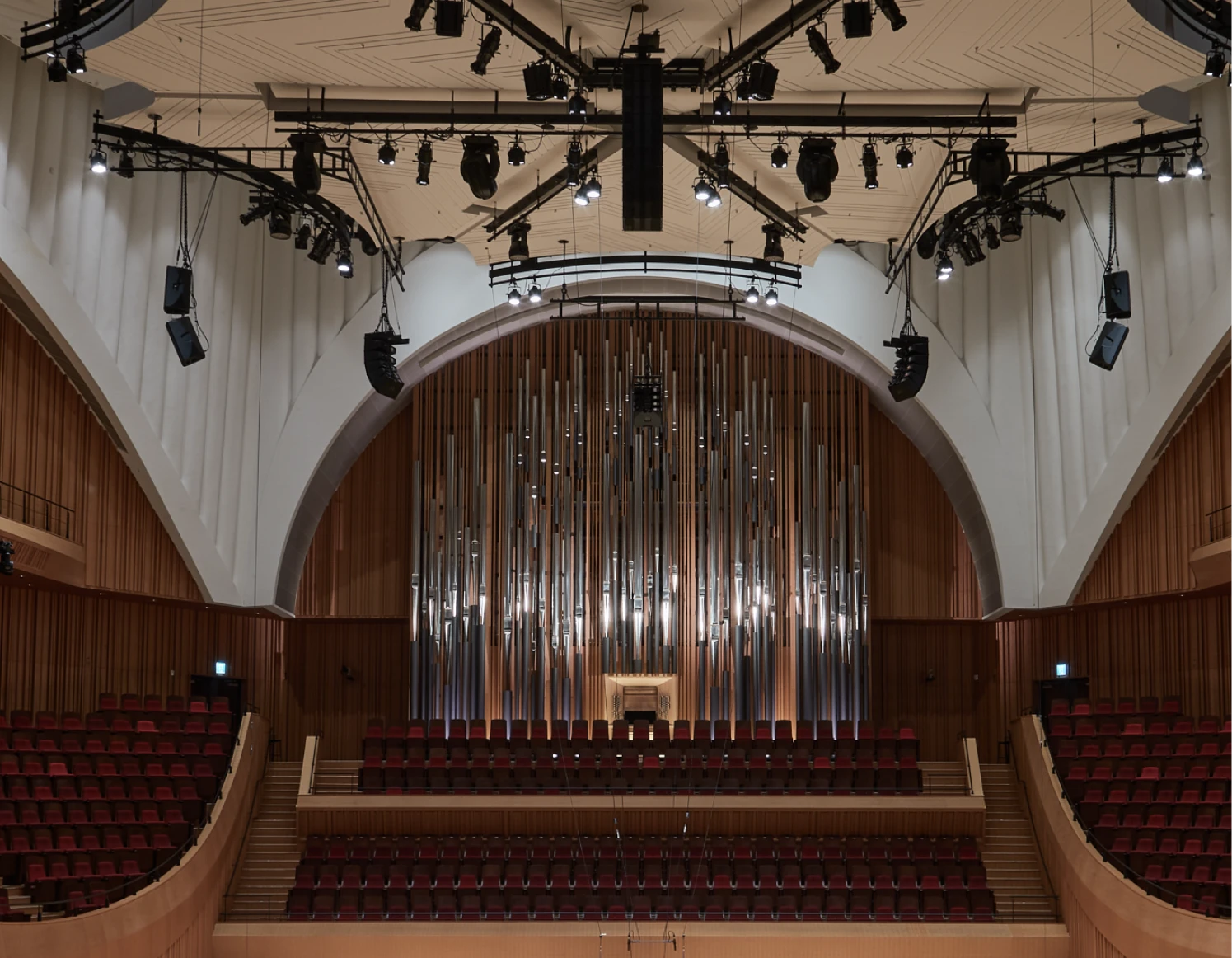
Korea's first vineyard-terrace hall, opened 2016 on the 8th floor of Lotte World Mall. A 5,000-pipe organ, a circular stage lift, and seating that puts the audience around (not in front of) the orchestra.
CAKESHOP
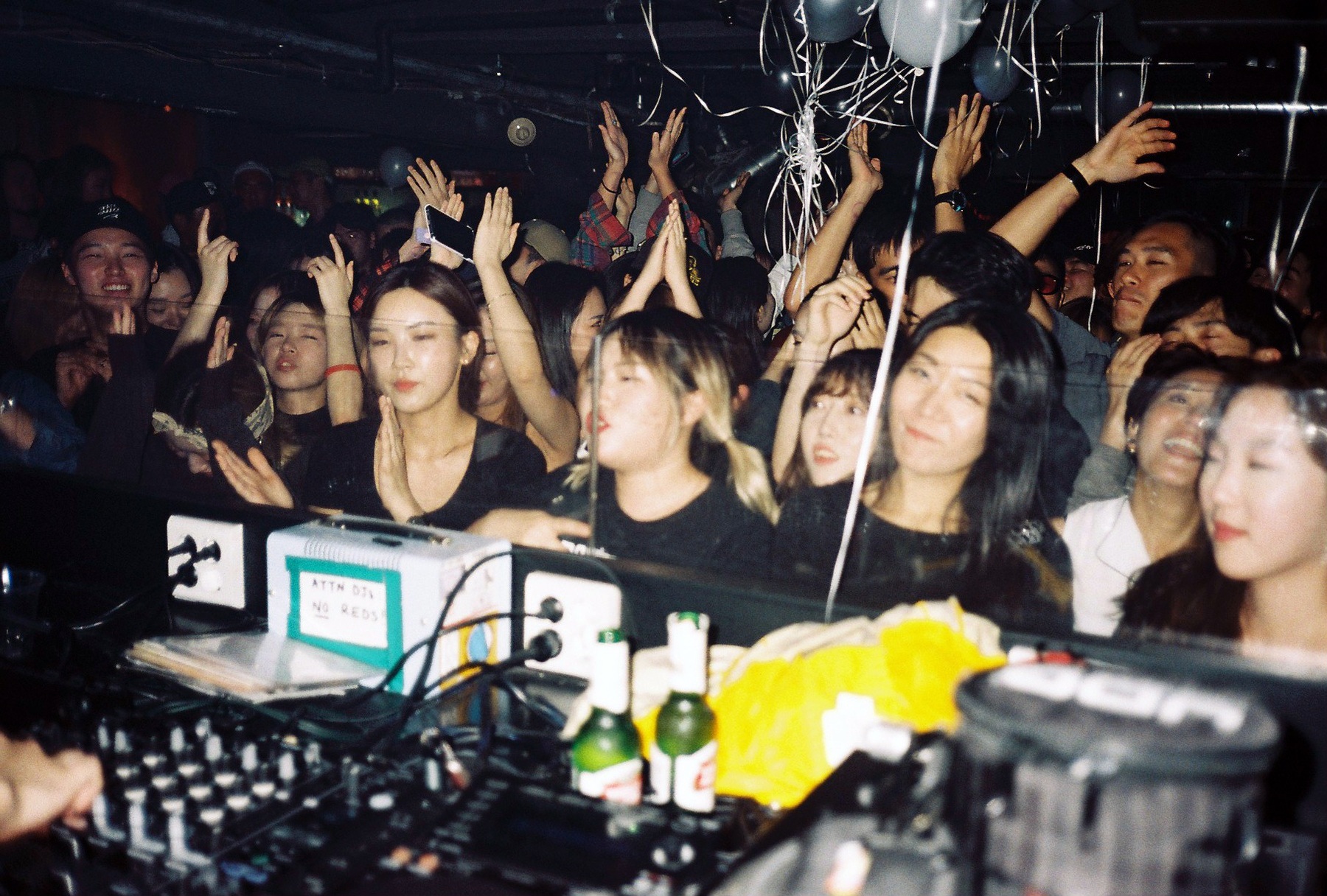
Windowless basement under Itaewon's main strip, since 2012. The room that defined Seoul's club export, where international hip-hop and bass acts make their first Korean stop.

NCPA BEIJING
Paul Andreu's 2007 titanium-and-glass dome rising from an artificial lake. You enter via an underwater tunnel and surface inside three halls (Opera, Concert, Theatre) under one shell.

CHAPEL OF SOUND
Open Architecture's 2021 cliff-side concert hall in the Chengde mountains, two hours from Beijing. A semi-open amphitheatre cast from pebble-aggregate concrete, shaped to channel the wind, the rain, the bird call into the music.

SHANGHAI SYMPHONY HALL
Arata Isozaki architecture and Yasuhisa Toyota acoustics, opened 2014. Partially sunken in the French Concession, with a 1,200-seat main hall and a 400-seat chamber room next door.

HONG KONG CULTURAL CENTRE CONCERT HALL
Home of the Hong Kong Philharmonic. 2,019-seat fan-shaped hall on the Tsim Sha Tsui waterfront. The largest mechanical pipe organ in Asia (8,000 pipes).

CLOCKENFLAP FESTIVAL
Three-day festival on the Central Harbourfront. The Hong Kong skyline is the back wall of every stage. The densest big-city festival skyline in the world.
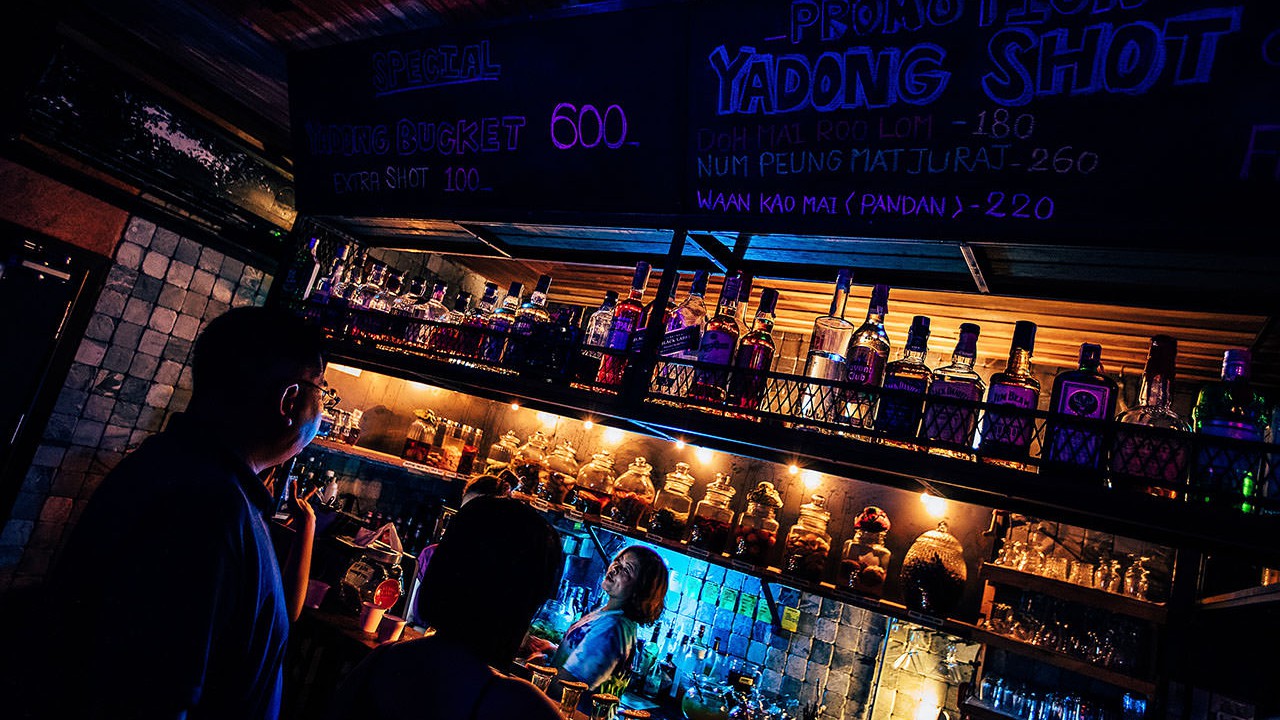
STUDIO LAM
Maft Sai's tiny Sukhumvit Soi 51 bar above Zudrangma Records. The city's headquarters for Thai mor lam revival and Asian psych-funk on original vinyl.
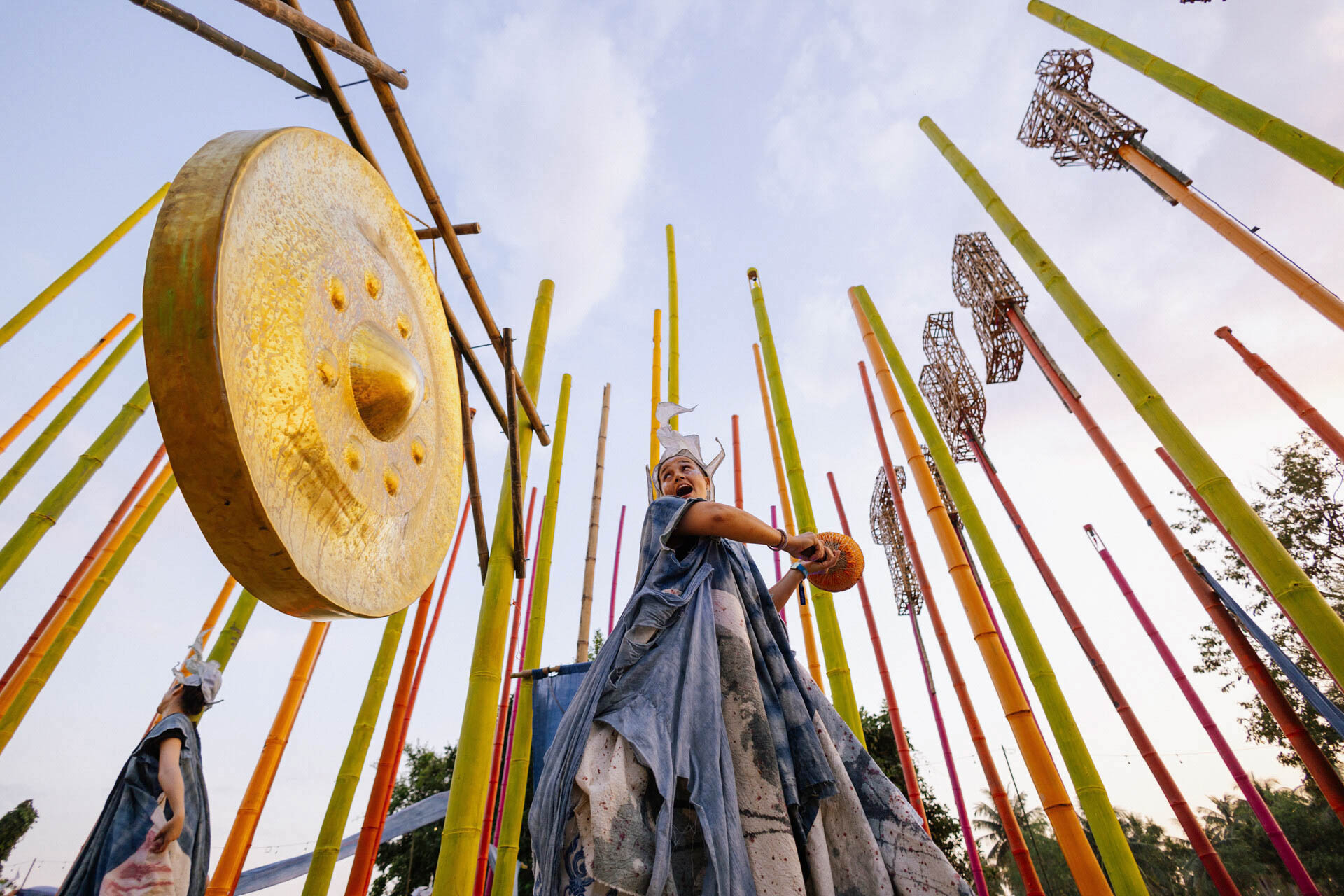
WONDERFRUIT FESTIVAL
Four days on the Fields at Siam Country Club outside Pattaya. Bamboo-architecture stages, sustainability ethos, programming closer to Burning Man than EDM.

HANOI OPERA HOUSE
1911 French colonial-built scaled-down Palais Garnier in the centre of Hanoi. The Renaissance Revival exterior is one of the most-photographed buildings in Indochina, the interior holds up acoustically.

ROYAL BALLET THEATRE LUANG PRABANG
Performance theatre inside the former Royal Palace in Luang Prabang. Masked dance with live court orchestra (khene, gongs, drums) in a UNESCO-protected town that goes to bed at 10pm.

ESPLANADE THEATRES ON THE BAY
Twin spiked-glass domes on Marina Bay, opened 2002. Russell Johnson / Artec acoustics in the 1,600-seat Concert Hall. An acoustic canopy that can be lowered to tune the room.
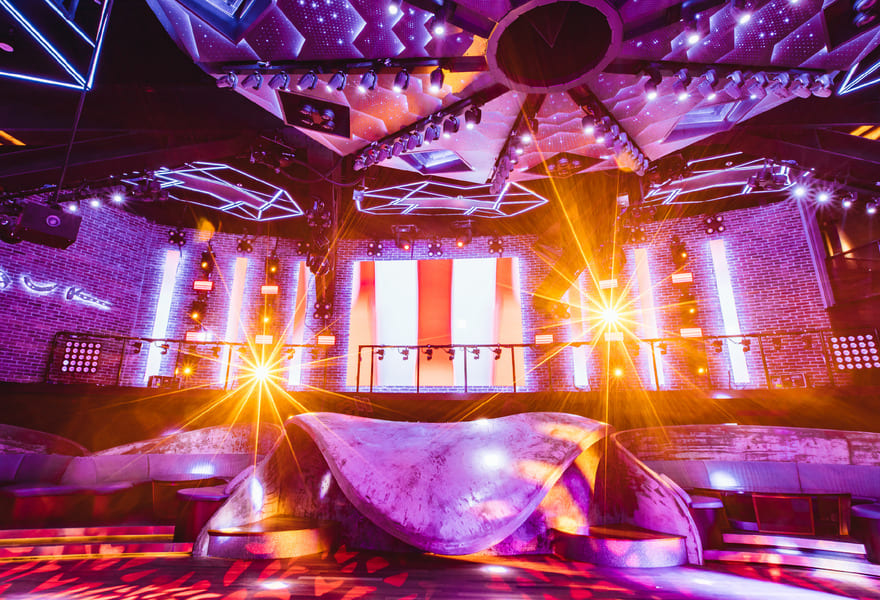
ZOUK SINGAPORE
Asia's longest-running superclub, founded 1991. Moved to Clarke Quay in 2016. Two-room layout (Zouk Main + Phuture).

DEWAN FILHARMONIK PETRONAS
920-seat shoebox concert hall on the second floor of the Petronas Twin Towers, opened 1998. Malaysia's first dedicated classical hall, home of the Malaysian Philharmonic Orchestra.

UBUD ROYAL PALACE (PURI SAREN AGUNG)
Nightly gamelan-and-dance in the open courtyard of the still-occupied Ubud royal family palace. Full-village gamelan orchestra, court-trained dancers, plastic chairs ten feet from the gongs.
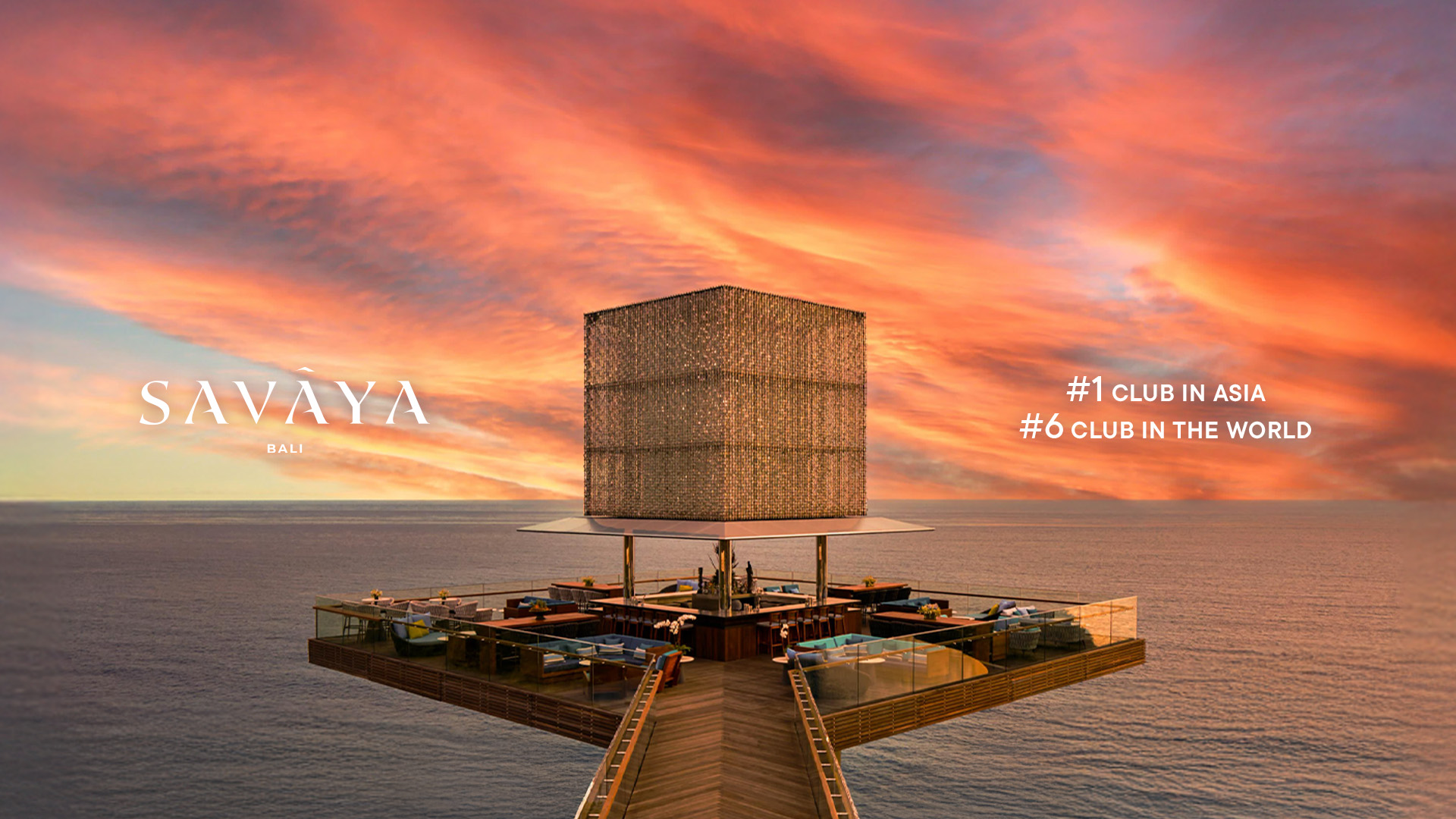
BALI CLIFFSIDE SOUND SANCTUARY
An immersive cliffside open-air sound space on the Uluwatu peninsula. Tiered stone terraces, the Indian Ocean as backdrop, programming that runs from sunrise sound baths to sunset DJ sets.

NCPA MUMBAI (TATA THEATRE)
India's first multi-venue arts centre, opened 1969 on Nariman Point. The 960-seat Tata Theatre has a semi-circular thrust stage with no proscenium or curtain, designed for classical Indian acoustics.

MAGNETIC FIELDS FESTIVAL
Three days inside a 17th-century Rajasthani palace. The courtyards become stages, the ramparts become viewing platforms, peacocks walk the lineup. December.

ZIRO FESTIVAL OF MUSIC
Four days in the Ziro Valley of Arunachal Pradesh. Open-field stages, indigenous Apatani village hosting, terraced rice paddies as backdrop. September.
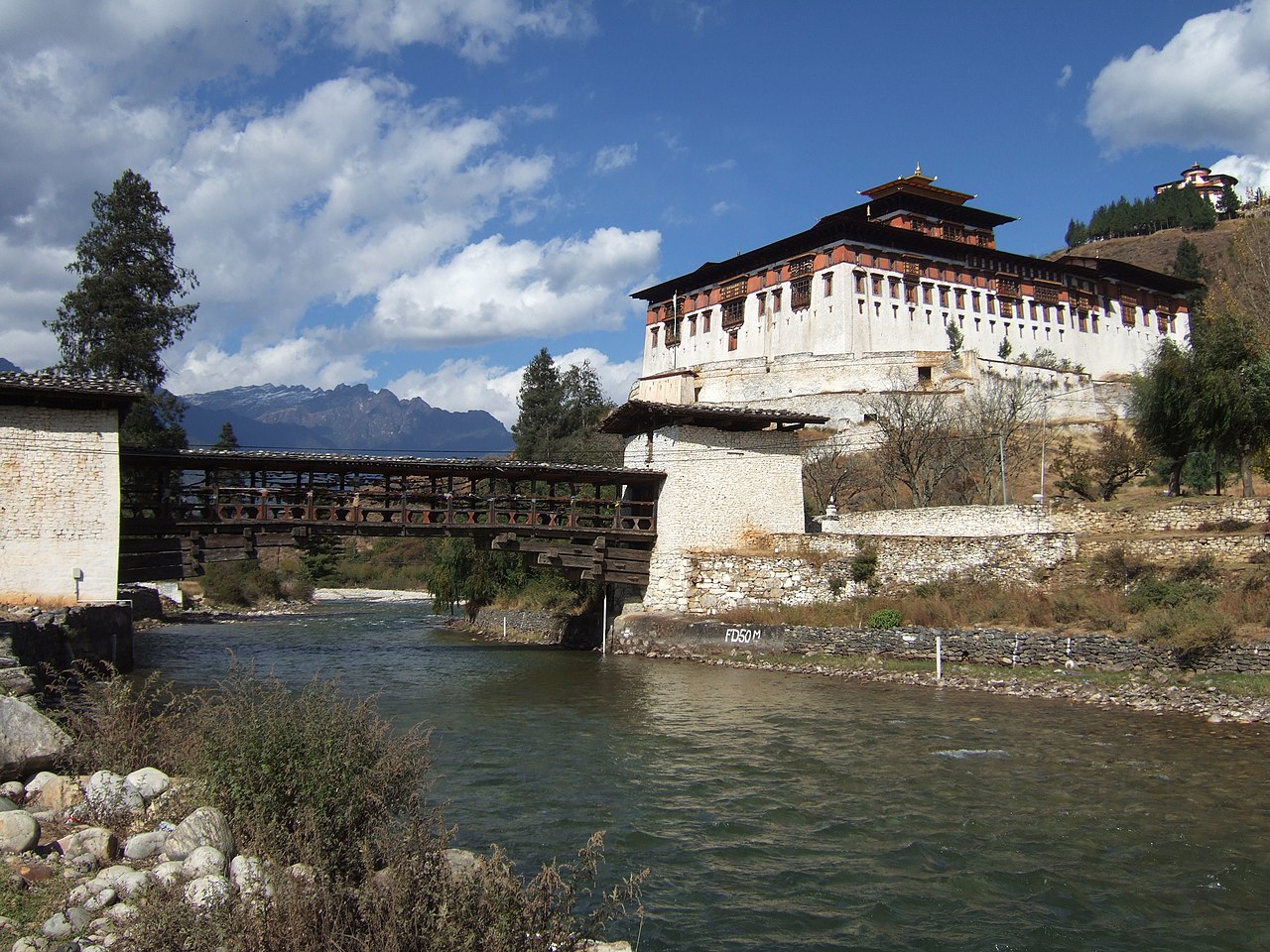
PARO TSHECHU
Annual five-day spring tshechu at Paro Dzong. Masked monks dance to long-trumpet drone, cymbal and drum in the dzong's open courtyard with the Himalayas as the upstage wall. March-April.
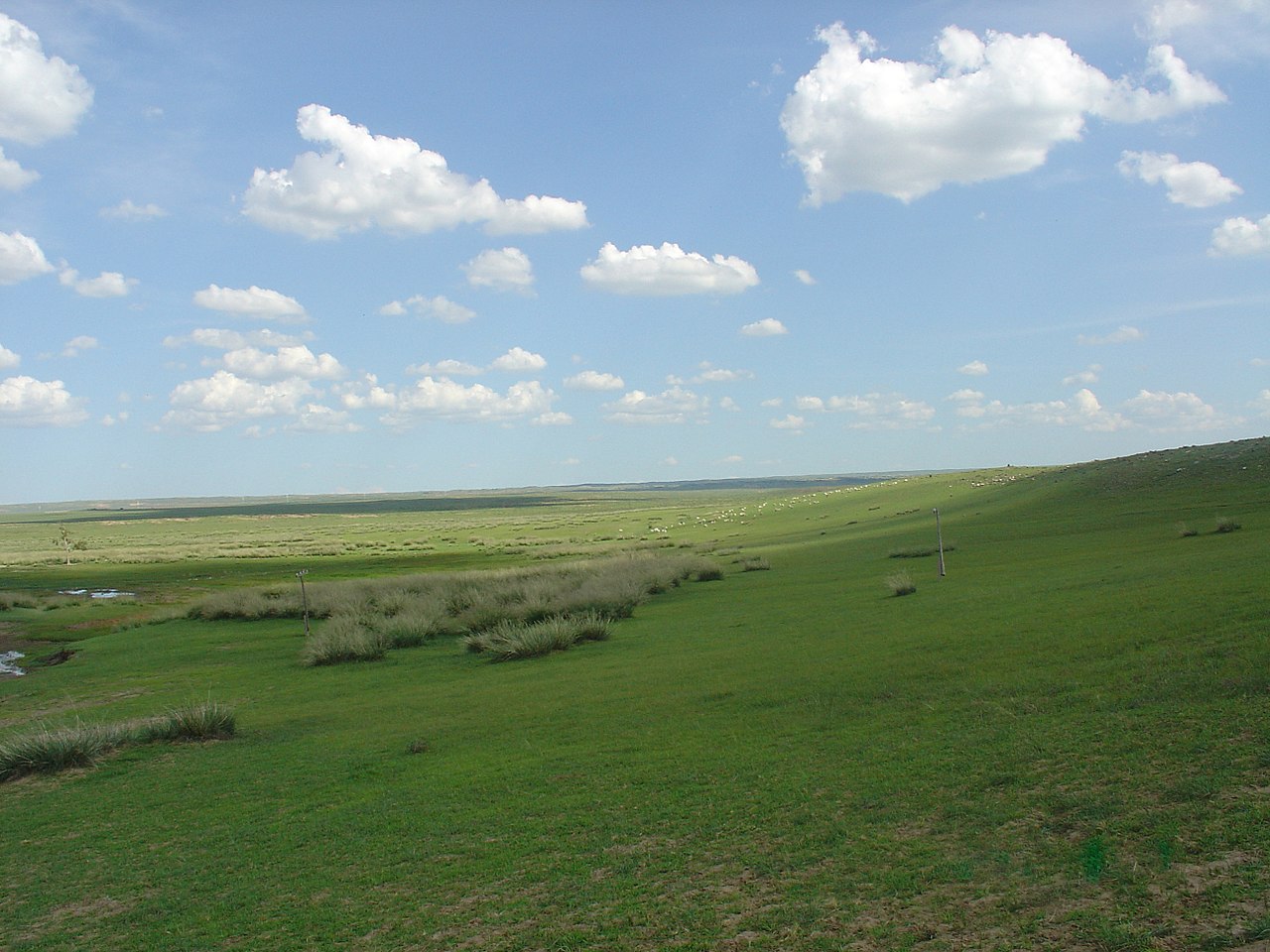
PLAYTIME FESTIVAL
Mongolia's flagship music festival, held in the Gachuurt Valley outside Ulaanbaatar. Three days, multiple stages, programming that runs Mongolian rock and indie alongside throat-singing and traditional ensembles.

WADI RUM RESONANCE
An open-air resonance space in Wadi Rum's protected desert. Bedouin oud and rebab nights, programmed by local guides under sandstone walls 200m tall. The desert is the venue.

YINYANG MUSIC FESTIVAL (GREAT WALL)
Annual three-day boutique electronic festival held literally on top of the Great Wall of China at the Huangyaguan section. Yin and Yang stages built into the battlements, mainstage at the foot of a Wall castle. 1,000-cap. September.